

How to Choose a Pool Finish for a Luxury Backyard
Estimated reading time: 7 minutes
A pool finish is the surface you see every day, feel underfoot, and rely on to protect the shell beneath it. That is why knowing how to choose pool finish is not simply a color decision. In a luxury backyard, the finish sets the visual temperature of the water, influences how the pool photographs in direct sun, and determines whether the space feels polished for years or starts looking tired too soon.
For Southern California homeowners, the right choice has to do more than look impressive on a sample board. It must perform through intense sun, frequent use, changing water chemistry, and the hardscape materials surrounding the pool. The strongest result comes from choosing the finish as part of the full backyard design, not as a final detail after every other decision has been made.
Start With the Water Color You Want
The finish color affects the water more than most homeowners expect. Water depth, sunlight, pool shape, surrounding walls, landscaping, and even the color of nearby pavers all change the final appearance. A small sample can look soft gray in a showroom and create a much deeper blue once it is installed across a large pool basin.
Light finishes tend to create brighter aqua, sky-blue, or Caribbean-blue water. They suit clean, airy backyards with pale stone, light porcelain, white stucco, and contemporary architecture. They can also make shallow areas feel more open, which is appealing for family pools and tanning ledges.
Medium blue, gray, and blended finishes are often the most versatile. They create a richer water tone without making the pool look overly dark, and they work well beside warm woods, natural stone, charcoal accents, and modern outdoor kitchens. For many high-end backyard renovations, this is the sweet spot between dramatic design and everyday practicality.
Dark finishes can create striking navy, sapphire, or reflective water. They bring a resort-style mood to a backyard, especially when paired with fire features, bold tile, and sophisticated landscape lighting. The trade-off is that dark surfaces absorb more heat, can make the water appear less transparent, and may show mineral deposits or surface variation more readily depending on the material and maintenance routine.
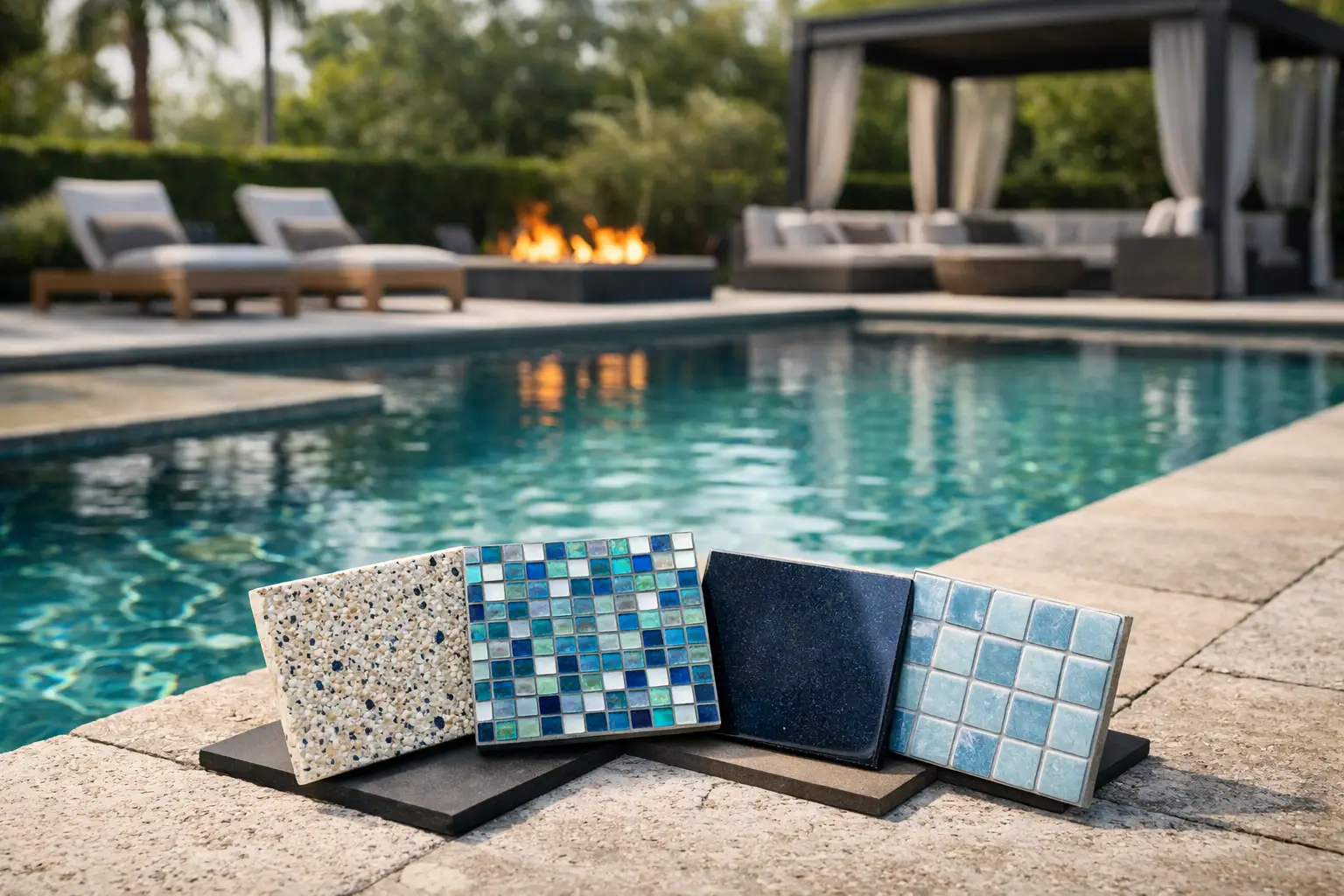
Never choose by the finish name alone. Review large, wet samples outdoors at different times of day. If possible, compare the finish beside the actual coping, deck material, waterline tile, and exterior paint colors planned for the project.
How to Choose a Pool Finish That Fits the Design
A refined pool design has visual hierarchy. The pool finish should support the architecture and hardscape rather than compete with every surface around it. If your backyard already includes heavily veined stone, patterned pavers, richly colored tile, and lush planting, a quieter finish can keep the composition from feeling busy. If the surrounding design is intentionally minimal, a more dimensional aggregate finish may provide the texture and depth the pool needs.
Consider the waterline tile and coping first. These materials sit at the edge of the water, so they create the clearest transition into the pool finish. Cool gray coping and blue-gray tile usually pair naturally with slate, silver, or deep-blue interior finishes. Warm travertine, cream porcelain, and sand-toned stone often look best with soft aqua, beige-gray, or balanced blue finishes.
The pool’s shape matters, too. A crisp geometric pool can carry a dark, contemporary finish with confidence. Freeform pools often benefit from finishes that have natural variation and a softer water color. There are exceptions, of course. A skilled design team can make almost any combination work, but the materials must be selected intentionally and viewed together before installation.
Compare the Main Pool Finish Materials
The material beneath the color affects durability, feel, maintenance expectations, and the level of visual detail. There is no universal best finish. The right option depends on how the pool will be used and the standard you expect for long-term appearance.
Plaster: Clean, Classic, and Budget-Conscious
Traditional plaster creates a smooth, uniform look and remains a familiar choice for many pool renovations. It can produce a beautiful light-blue water color and works well when the desired aesthetic is simple, clean, and timeless.
Its limitation is longevity relative to upgraded aggregate options. Plaster can be more sensitive to water balance and may reveal etching, mottling, staining, or wear earlier in its life. That does not make it the wrong choice, but it does make professional application and disciplined pool care especially important.
Quartz: More Color Depth and Added Strength
Quartz finishes combine plaster with quartz aggregate for a stronger, more dimensional surface. They are available in a wide range of colors, from bright blue blends to elegant gray and soft neutral tones. The result typically offers more visual depth than standard plaster while maintaining a refined finish underfoot.
Quartz is a strong fit for homeowners who want a premium appearance without the pronounced texture of a pebble surface. As with any cementitious finish, water chemistry still matters. Proper startup procedures and regular maintenance protect the finish and help preserve its color.
Pebble and Exposed Aggregate: Durable Resort Style
Pebble and exposed aggregate finishes are popular in luxury outdoor environments because they offer natural variation, rich water color, and excellent durability. They can create everything from a bright coastal look to a dark, lagoon-inspired pool, depending on the aggregate blend.
The trade-off is texture. Pebble finishes are generally more tactile than plaster or quartz, and some homeowners are more sensitive to that feeling on bare feet. A polished aggregate option can reduce the roughness while retaining much of the depth and durability that make aggregate finishes desirable. Ask to see and touch full-size samples before committing.
Tile: Elevated Detail for Select Areas or Full Interiors
Tile offers unmatched design precision, color stability, and a highly elevated look. It is frequently used at the waterline, on raised spa walls, in accent bands, and on tanning ledges. A full tile interior can be exceptional in the right project, especially where the goal is a highly tailored architectural statement.
Because tile installation requires meticulous substrate preparation, layout, and craftsmanship, it is a decision that should be coordinated early with the complete pool design. The scale of the tile, grout color, reflective qualities, and maintenance plan all deserve careful attention.
Think Beyond Looks: Comfort, Safety, and Maintenance
The most beautiful finish should still suit the people using the pool. A household with young children, frequent guests, or daily swimmers may prioritize a smoother surface and clear water visibility. A homeowner who wants a dramatic evening setting may accept a darker, more reflective finish in exchange for its visual impact.
Pool depth also changes the equation. A dark finish may look elegant in a deep swimming pool but can make a shallow baja shelf appear visually deeper than it is. Lighter finishes provide more contrast in shallow areas and can make steps, benches, and ledges easier to see. This is particularly valuable when safety and comfortable family use are central to the design.
Maintenance is not optional with any finish. Proper circulation, balanced chemistry, prompt attention to metal staining, and professional startup care all affect how the surface ages. Do not let a finish selection carry unrealistic promises. Even premium materials need correct installation and consistent care to perform at their best.
Account for Southern California Sun and Your Backyard Setting
Los Angeles sunshine gives pools their signature sparkle, but it also intensifies every design choice. Strong afternoon light can make a light finish appear almost white at the waterline, while a dark finish can look nearly black in shaded areas. Mature trees, hillside exposure, covered patios, and adjacent glass walls all affect what you will see from the house and outdoor entertaining areas.
Look at the pool from the places you will actually use most: the kitchen windows, primary suite, patio seating, outdoor kitchen, and cabana. The pool is often the visual anchor of the entire yard. Its finish needs to look intentional from every major sightline, not just from the water’s edge.
A thoughtful plan also considers the surrounding deck temperature and glare. Light hardscape reflects more light into the pool, while darker pavers and walls can make the water read deeper. These small interactions are exactly why selecting finishes in isolation leads to disappointing results.
Make the Final Selection With Real Samples and a Clear Scope
Before approving a finish, review the exact material blend, color, application method, and areas included in the scope. Confirm whether the finish will extend through the spa, steps, benches, tanning ledges, and any water features. These details affect consistency and help prevent last-minute substitutions that change the final look.
Ask to see the selected material wet, in direct sun, and next to your chosen tile and coping. Discuss how the finish will be started up after installation and what care is expected during the first weeks. Clear answers at this stage protect both the design vision and the investment.
At Build Up Remodeling Inc, pool finishes are evaluated alongside the full outdoor environment so the water, hardscape, lighting, and architecture read as one completed design. Choose the surface that supports the way you want to live outdoors, then insist on the craftsmanship and project clarity required to make that vision hold up.
Get Started
Send us a brief message and let’s work together.
"*" indicates required fields
We try our best to reach out in less then 24 Hours.