
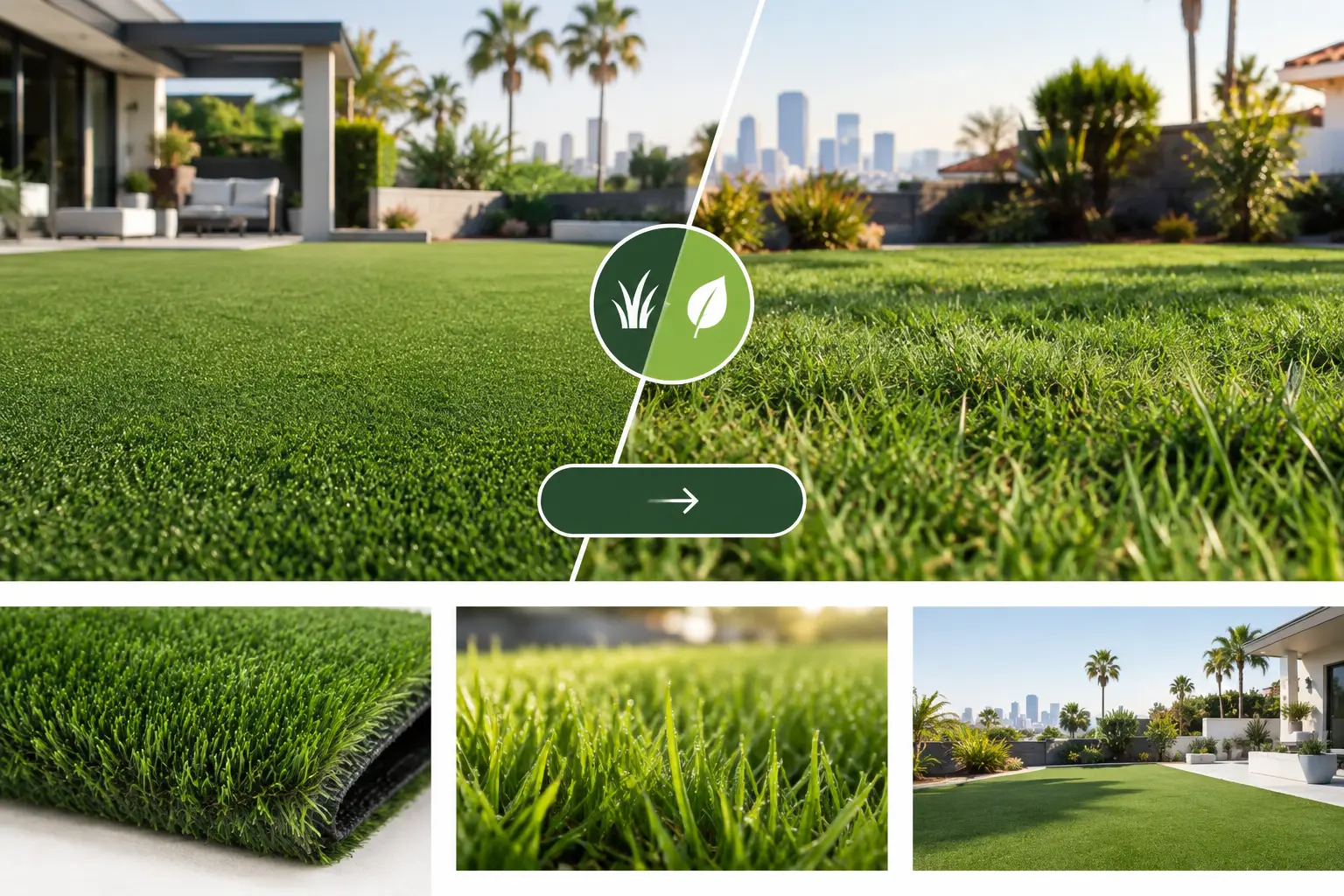
Turf Versus Grass: Which Fits Your LA Yard?
Estimated reading time: 7 minutes
A beautiful yard should support the way you actually live – from barefoot pool days and kids’ playtime to weekend entertaining and polished curb appeal. The turf versus grass decision is not simply about choosing green over green. It determines how your landscape performs through heat, drought restrictions, pet use, shade, foot traffic, and the maintenance you are willing to take on year after year.
For Los Angeles homeowners investing in a complete outdoor transformation, the right answer is often more strategic than choosing one surface across the entire property. Natural grass and artificial turf each have clear strengths. The best landscapes use those strengths in the right places.
Turf Versus Grass: The Real Difference
Natural grass is a living landscape material. It grows, cools the ground, changes with the seasons, and needs consistent watering, mowing, feeding, and occasional repair. When properly installed and maintained, it brings a softness and organic character that many homeowners still prefer for open lawns, family spaces, and traditional garden designs.
Artificial turf is a manufactured surface designed to deliver a consistently green appearance with far less routine maintenance. Quality systems are built in layers, including excavation, a compacted base, drainage planning, turf material, seam work, and infill. The visible lawn is only one part of the installation. What sits beneath it determines whether the surface drains well, stays smooth, and holds up to regular use.
The decision comes down to more than appearance. It is about performance, long-term upkeep, comfort, and how each section of the yard needs to function.
Water Use and Ongoing Maintenance
Water conservation is a practical concern for Southern California properties. A natural lawn needs regular irrigation to remain dense and green, especially through extended warm, dry periods. The exact amount depends on the grass variety, sun exposure, soil, slope, and local requirements, but a thriving lawn is never a set-it-and-forget-it feature.
It also requires mowing, edging, fertilizing, weed control, aeration, and reseeding or sod repair when bare areas develop. For homeowners who enjoy gardening, this can be part of the appeal. For those who want a refined yard without adding another item to the weekly schedule, it can become a burden.
Turf removes mowing and routine irrigation from the equation. It still needs care: leaves and debris should be cleared, fibers may need occasional brushing, and pet areas need to be rinsed and treated appropriately. But the maintenance is lighter and more predictable. That reliability makes artificial turf particularly effective for front-yard curb appeal, side yards, dog runs, and high-traffic backyard zones.
There is one critical exception: drainage cannot be treated as an afterthought. Poor base preparation or weak drainage can create odors, pooling, uneven areas, and premature failure. A premium result depends on professional site preparation, not just rolling out a green surface.
Comfort, Heat, and How the Yard Feels
Natural grass has a clear advantage in direct summer sun. Living grass stays cooler underfoot because it holds moisture and releases water through the plant. It gives children and pets a forgiving surface and creates a classic, relaxed feeling that is difficult to duplicate exactly.
Artificial turf can become noticeably warm in exposed areas during hot weather. Modern turf materials and smart design choices can improve comfort, but turf is not the right choice for every full-sun space. Placement matters. A shaded lawn area, a section near a covered patio, or a play zone used mostly in the morning may perform very differently from a wide-open south-facing yard.
This is where a thoughtful landscape plan earns its value. A designer can position turf where its consistency matters most, then use pavers, shade structures, planting beds, or natural lawn in areas where heat management and sensory comfort matter more. The result feels intentional instead of overly manufactured.
Appearance and Design Flexibility
A well-kept natural lawn has movement, variation, and a living texture. It works beautifully with mature trees, garden-forward landscapes, and homes where the goal is a softer, more traditional outdoor setting. Its downside is inconsistency. Shade, pet wear, compacted soil, and irrigation problems can quickly create thin or discolored patches.
Artificial turf delivers a clean, camera-ready green surface in every season. For a contemporary backyard with light-colored pavers, a pool, fire feature, and sculpted planting, that visual control can be a major advantage. It frames hardscape well and provides contrast against stone, concrete, and wood accents.
Not all turf looks alike. Fiber shape, pile height, color variation, and density influence whether the finished surface looks natural or obviously synthetic. A premium installation avoids the flat, plastic look by selecting a product that matches the scale and design direction of the property. The turf should complement the architecture, not compete with it.
Pets, Children, and High-Traffic Areas
If your yard is used hard, natural grass will show it. Repeated running routes, soccer practice, large dogs, and party traffic can compact the soil and wear out turfgrass faster than it can recover. Repairs are possible, but they require ongoing attention and may not blend immediately with the surrounding lawn.
Artificial turf is built for consistency under regular traffic. It does not develop mud, and it gives pets and children a usable play surface after rain or irrigation. For pet households, the installation details matter even more than the turf style. Proper grading, drainage, antimicrobial infill where appropriate, and a cleaning plan are essential for keeping the area fresh.
That said, turf is not maintenance-free and it is not indestructible. Sharp objects, hot grill components, fireworks, and reflected sunlight from certain windows can damage synthetic fibers. Homeowners who entertain often should plan cooking areas, fire features, and furniture layouts so the lawn surface is protected.
Cost Is About the Full Lifecycle
The upfront investment for artificial turf is generally higher than installing sod, particularly when the project includes excavation, base work, drainage, and detailed edge treatment. But the ownership calculation does not end on installation day. Turf can reduce recurring water, mowing, fertilizer, and repair demands over time.
Natural grass may cost less to establish, but its lifetime upkeep is ongoing. Irrigation equipment needs monitoring, turf health depends on consistent care, and worn areas need attention. Neither option is automatically the better financial decision. It depends on the size of the area, the way it will be used, water consumption, and whether you plan to maintain the lawn yourself or hire regular service.
For a major outdoor remodel, it is smarter to evaluate the surface within the full design plan. A small natural lawn paired with pavers, planting, and turf accents may deliver more value and visual impact than an oversized lawn of either type.
When Natural Grass Is the Better Choice
Choose natural grass when cool barefoot comfort is a priority, when you value the character of a living landscape, or when your property has enough space and irrigation capacity to support a healthy lawn. It can also be the stronger choice for homeowners who enjoy active landscape care and want a more traditional garden environment.
Grass is especially compelling in areas with moderate sun, good soil conditions, and a realistic maintenance plan. A lawn that receives proper care will always look and feel better than a neglected one, regardless of how premium the rest of the backyard may be.
When Artificial Turf Is the Better Choice
Choose artificial turf when you want dependable green coverage, lower routine maintenance, and strong performance in high-traffic areas. It is a natural fit for narrow side yards, front-yard focal areas, pet zones, putting spaces, and backyard sections where mud and worn grass would undermine the finished look.
It also works well for homeowners who travel frequently, manage busy family schedules, or want a polished resort-style exterior without weekly mowing. The key is treating it as a constructed landscape feature that needs professional installation, not a shortcut.
The Strongest Yards Often Use Both
The most successful turf versus grass decision is frequently a hybrid one. Natural grass can anchor the area where comfort and a living landscape matter most. Artificial turf can solve practical challenges in heavily used or difficult-to-maintain zones. Pavers, decorative gravel, planted borders, and shade elements create structure around both.
This approach gives a backyard more dimension and prevents a large green surface from feeling flat. It also allows each material to do the job it does best. A precise design plan can account for drainage, circulation, sun exposure, pool access, and the daily routines that will shape how the yard ages.
Your outdoor space should not force you to choose between beauty and practicality. It should be built around the life you want to live there. Build Up Remodeling helps homeowners turn that vision into a coordinated outdoor environment, with each surface selected for performance as well as appearance. Start with how you use the yard, then choose the green space that will keep delivering long after the project is complete.
Get Started
Send us a brief message and let’s work together.
"*" indicates required fields
We try our best to reach out in less then 24 Hours.