

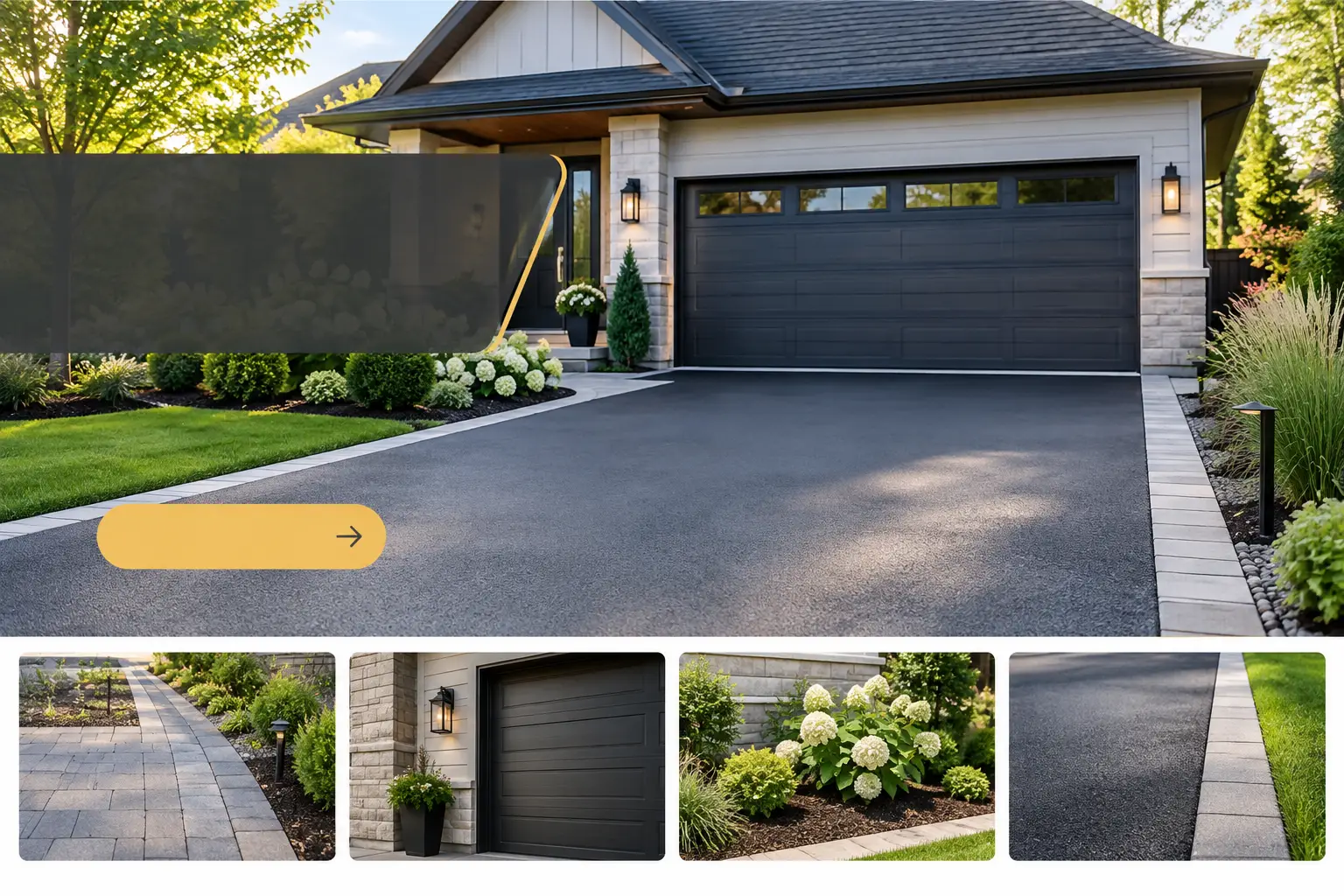
Driveway Curb Appeal Makeover Ideas That Last
Estimated reading time: 7 minutes
A driveway curb appeal makeover changes the first impression of your home long before a guest reaches the front door. In Southern California, where outdoor architecture is part of daily life, a cracked concrete approach, mismatched edges, or an undersized entry can make an otherwise beautiful property feel unfinished. The right redesign gives the home a stronger arrival experience, improves function, and creates a polished transition from street to entry.
The goal is not simply to replace a driveway surface. It is to design a complete front-of-property composition that fits the architecture, handles vehicles comfortably, manages water correctly, and looks exceptional year after year.
Start With the Arrival, Not the Material
Many homeowners begin by choosing a paver color or collecting driveway photos. That is understandable, but it can lead to a surface-first design that does not solve the larger problem. A premium driveway should be planned around how people experience the property from the street, from inside a vehicle, and on foot.
Consider the full arrival sequence: the curb line, driveway entry, vehicle turning path, front walk, landscaping, gates, and front door. These elements should feel connected rather than assembled one at a time. A wide, clean entry can make a home feel more substantial, while carefully placed planting can soften hardscape and create privacy without blocking visibility.
This is also where scale matters. A driveway that is too narrow may create daily frustration, especially for larger vehicles. One that is expanded without considering the front yard can make the property feel overly paved. The strongest designs balance vehicle access with green space, pedestrian movement, and a clear visual focal point.
Choose a Driveway Surface Built for Southern California
Material selection has a major impact on both appearance and long-term maintenance. The best option depends on the home’s style, the condition of the existing base, sun exposure, drainage, and how the driveway is used.
Pavers Create Detail and Design Flexibility
Interlocking concrete pavers are a strong choice for homeowners seeking a high-end, custom appearance. They offer an extensive range of colors, textures, sizes, and laying patterns, allowing the driveway to complement contemporary, Mediterranean, traditional, and transitional homes. Borders can define the edges, while a contrasting band can guide the eye from the street toward the entry.
Pavers are also practical. Because the surface is made of individual units, localized repairs can be more manageable if settling or damage occurs. Proper installation remains essential, however. A beautiful paver driveway is only as reliable as its excavation, compaction, base preparation, edge restraints, and drainage plan.
Decorative Concrete Offers a Clean, Monolithic Look
Concrete can be an excellent fit for a more streamlined aesthetic. It works especially well for modern homes that benefit from broad panels, crisp joints, and a quieter visual field. Finish options can add character without making the driveway look busy.
The trade-off is that concrete is less flexible when repairs are needed. Cracking can occur over time, particularly where soil movement, inadequate base preparation, or poor water control are involved. Intentional joint placement and correct installation help, but homeowners should understand that no large concrete surface remains completely unchanged forever.
Natural Stone Is Best Used With Restraint
Stone can add dramatic luxury, particularly at a driveway apron, pedestrian walk, border, or entry court. Covering an entire vehicle driveway in stone may be appropriate for select properties, but it is not automatically the best design choice. It can increase complexity and may compete with the home itself.
Often, the most refined approach is pairing a durable primary driveway material with stone accents that create hierarchy at the street edge or front entrance.
Design the Edges That Make the Driveway Look Finished
A driveway surface alone rarely delivers a complete curb appeal transformation. The details around it are what make the project feel intentional.
A defined border is one of the highest-impact upgrades. It can frame the paving field, introduce a complementary color, and prevent the broad expanse of a driveway from looking flat. At the street, a well-designed apron creates a clean handoff between public curb and private property. Near the home, an entry pad or widened front walk can establish a more gracious path for guests.
Retaining walls, low seat walls, decorative gates, and planters can also shape the entry. These features must be proportioned carefully. A wall that is too tall or too visually heavy can make a front yard feel closed off. A lower, layered arrangement with planting often feels more welcoming while still delivering definition and privacy.
For homes on sloped lots, the edge strategy becomes even more important. Grade changes should be resolved with purposeful hardscape rather than improvised transitions. This improves safety, protects the driveway, and gives the entire elevation a more composed appearance.
Add Landscape and Lighting for a Resort-Level Entry
Hardscape provides structure. Landscape and lighting provide depth, softness, and evening presence. When these elements are planned together, the driveway becomes part of the home’s architecture instead of a parking surface.
Planting should support the driveway rather than crowd it. Layered evergreen structure, sculptural accent plants, and groundcover can create a composed Southern California look with less visual clutter. The exact palette should respond to sun exposure, irrigation needs, and maintenance preferences. A clean modern home may benefit from restrained, architectural planting, while a warmer traditional facade can carry more texture and color.
Lighting deserves equal attention. Low-level path lighting improves visibility along pedestrian routes, while uplighting can showcase mature trees, textured walls, or key architectural features. Subtle fixtures near gates and address markers make the property easier to navigate after dark.
Avoid treating lighting as an afterthought. Fixtures should be located before installation begins so conduit, wiring, hardscape cuts, and planting zones are coordinated. The objective is a warm, layered glow – not harsh brightness or a runway effect.
Protect the Investment With Drainage and Base Work
The most impressive driveway design can fail if water is not managed correctly. Drainage is one of the least glamorous parts of a driveway curb appeal makeover, but it is one of the most valuable.
Water should move away from the home and be directed through a planned drainage system. The correct approach depends on site grading, existing conditions, and local requirements. In many cases, this may include carefully pitched paving, channel drains, catch basins, or other drainage components integrated into the hardscape layout.
Base preparation is just as critical. Removing compromised material, establishing the correct sub-base, compacting it properly, and accounting for the weight of vehicles are not optional details. They are the foundation of a driveway that resists settlement, shifting, and premature wear.
This is why a detailed project scope matters. Homeowners should know how the old driveway will be removed, what happens below the finished surface, how drainage will be addressed, where materials will transition, and how the site will be protected during construction. Clear answers early prevent costly assumptions later.
Avoid the Most Common Driveway Makeover Mistakes
The first mistake is designing from a single inspiration image. A photo may show an attractive paver pattern, but it cannot reveal the slope, soil conditions, vehicle needs, architecture, or drainage challenges of your property.
The second is using too many materials. A driveway, border, wall cap, walkway, and entry should have variation, but every element does not need a different color or texture. Limited, coordinated materials typically look more expensive because the design feels disciplined.
The third is underestimating construction logistics. Driveway renovations affect daily parking, access to the house, landscaping, and sometimes gates or front entry paths. A professional plan accounts for sequencing, protects adjacent areas, and sets clear expectations for how the property will function during the build.
Finally, do not overlook the transition to the front door. If the driveway is elevated but the entry walk, house numbers, lighting, and landscaping remain dated, the finished result can feel disconnected. A well-managed design-and-build process considers the entire arrival experience from the beginning.
Build a Driveway That Belongs to the Home
The best driveway renovations do not chase a passing trend. They make the property look as though it was always designed that way: balanced, durable, and unmistakably intentional. For Los Angeles homeowners, that means combining elevated materials with practical site planning and craftsmanship that holds up under real daily use.
Build Up Remodeling approaches driveway transformations as part of a complete exterior vision, coordinating design, hardscape, lighting, landscape integration, and construction under one managed process. The result should feel refined from the curb, comfortable in everyday use, and worthy of the home behind it.
Before selecting a surface, stand at the curb and look at the full composition. The most valuable decision may not be the paver color at all. It may be the design choice that makes every element on the way to your front door feel connected.
Get Started
Send us a brief message and let’s work together.
"*" indicates required fields
We try our best to reach out in less then 24 Hours.