

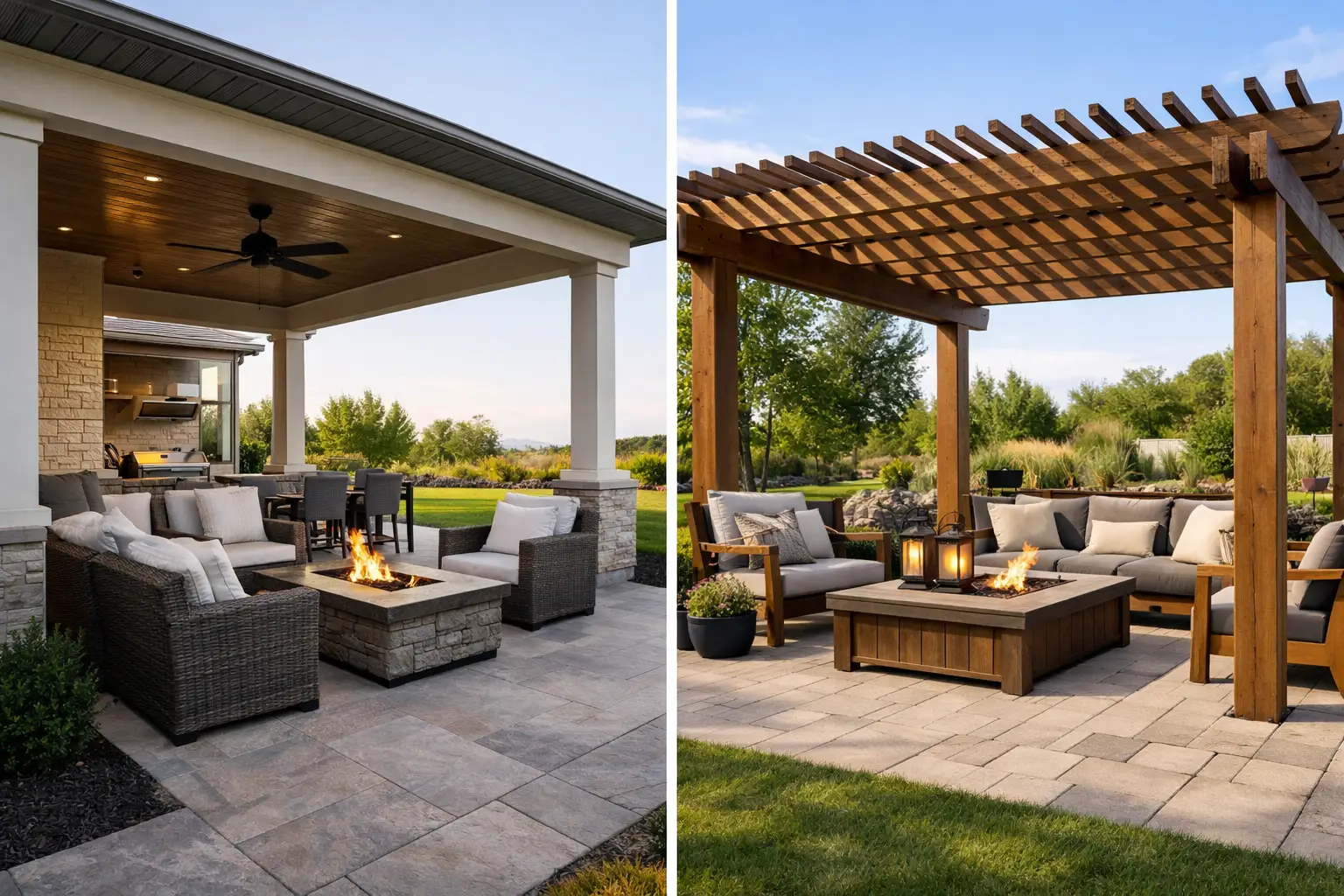
Covered Patio vs Pergola for Your Backyard
Estimated reading time: 7 minutes
A beautiful backyard can still go unused if the afternoon sun makes the space unbearable. That is why the covered patio vs pergola decision matters so much for Southern California homeowners. Both structures add architecture, shade, and entertaining potential, but they deliver very different levels of comfort, protection, and long-term functionality.
The right choice is not simply about which one looks better in a photo. It depends on how you want to use the space, where the sun hits your yard, whether you plan to add an outdoor kitchen or fire feature, and how much weather protection you expect from the structure. A properly designed shade solution should make your backyard feel like an extension of your home, not a space you only visit on mild days.
Covered Patio vs Pergola: The Core Difference
A covered patio has a solid or fully roofed overhead structure. It is typically attached to the home, although it can also be designed as a detached pavilion. The roof may use materials that coordinate with the home, creating a more permanent, finished outdoor living area.
A pergola uses open rafters or slats across the top. It provides filtered sunlight and visual definition while maintaining an airy, open feel. Some pergolas can be upgraded with retractable canopies, adjustable louvers, shade fabric, or climbing plants, but a traditional pergola does not provide full rain or sun protection.
Think of a covered patio as an outdoor room and a pergola as an architectural feature that frames an outdoor experience. Both can be high-end additions. The best choice comes down to performance, not just appearance.
When a Covered Patio Is the Better Investment
A covered patio is the stronger option for homeowners who want dependable shade and a true outdoor living zone. In Los Angeles, where bright sun can limit the use of an exposed patio for large parts of the day, a solid cover makes the area more practical from morning through evening.
You want protection, not partial shade
A solid patio cover provides consistent relief from direct sunlight. It also offers protection during light rain, falling leaves, and occasional weather changes that can quickly disrupt an outdoor gathering. If you picture serving dinner outdoors, relaxing with family, or watching a game without moving furniture every time conditions change, a covered structure delivers a more reliable result.
This is particularly valuable over an outdoor kitchen, dining area, or lounge seating. These spaces often include investments in cabinetry, appliances, upholstery, and lighting. A roof overhead helps protect those finishes while making the area feel more intentional and complete.
You are building a backyard around entertaining
A covered patio can support the features that turn a basic yard into a resort-style environment. Recessed lighting, ceiling fans, heaters, integrated speakers, and finished ceilings are easier to incorporate into a solid structure. The result can feel polished enough for a formal dinner yet comfortable enough for a casual weekend with the kids.
It also creates a clear transition from indoors to outdoors. When designed to align with the home’s roofline, doors, windows, and patio materials, a covered patio can make the backyard feel larger and more valuable without looking like an afterthought.
You value long-term versatility
A covered patio generally gives you more freedom in how the space is used. It can shelter a dining table today and become a lounge, play area, or poolside retreat later. For homeowners planning a larger backyard renovation, this flexibility matters. The cover becomes the anchor around which pavers, artificial turf, a pool, fire features, and landscaping can be organized.
The trade-off is that a covered patio is usually a more involved construction project. Proper structural engineering, drainage, electrical planning, and permitting may be required depending on the design and jurisdiction. Those details are not reasons to avoid the project. They are reasons to have the structure planned and built correctly from day one.
When a Pergola Makes More Sense
A pergola is ideal when the goal is atmosphere, definition, and filtered light rather than complete coverage. It can transform an open patio, garden path, pool deck, or fire pit area without making the yard feel enclosed.
You want an open-air luxury look
There is a reason pergolas remain popular in high-end backyard designs. Their clean beams and repeating lines introduce scale and structure into a landscape. They can frame a view, create a destination beside the pool, or give a dining area a strong visual identity.
Because light passes through the overhead members, a pergola preserves the bright, open character of Southern California outdoor living. It is especially effective in areas that already receive some natural shade or are used later in the day when the sun is lower.
You need to define a zone in a large yard
Large backyards can feel scattered when every element sits in open space. A pergola creates a sense of destination without adding walls. Place one over a seating area beside a fire feature, a dining table near the outdoor kitchen, or a pair of lounge chairs overlooking the pool, and that area immediately feels designed for a purpose.
A pergola can also be a smart complement to a covered patio. The patio cover handles the main dining and entertaining area, while the pergola creates a separate open-air retreat. This layered approach can make a backyard feel more like a private resort than a single flat patio with furniture.
You are comfortable with variable shade
This is the key consideration. A traditional pergola will not block the sun equally throughout the day. As the sun moves, so does the shade pattern. That can be beautiful, but it may not work for a west-facing yard that gets intense afternoon exposure.
Homeowners sometimes expect a pergola to perform like a patio cover and are disappointed when it does not. If full shade is a non-negotiable requirement, choose a covered patio or specify a pergola system with an appropriate shade solution during the design phase.
Design Factors That Should Guide Your Decision
The sun path is often more important than the structure itself. A north-facing patio may need only partial coverage, while a west-facing entertaining area may demand a solid roof to be usable during peak afternoon hours. Before choosing materials or finishes, assess when you use the yard and where the strongest heat lands.
Your home’s architecture matters too. A covered patio can be designed to look original to the home, with coordinated roofing, trim, columns, and ceiling details. A pergola can either blend in or create a deliberate modern contrast, depending on the beam size, color, and surrounding hardscape.
Privacy is another factor. A patio cover can incorporate side elements, screens, or carefully placed landscaping to make an exposed yard feel more secluded. A pergola remains more open by nature, though vertical slats, curtains, and planting can add visual separation without closing the area off.
Finally, consider maintenance. Both structures require quality materials and professional installation, but solid covers demand careful attention to roof drainage and integration with the house. Pergolas have fewer roofing components, yet exposed beams, fasteners, and finish materials must still withstand heat, moisture, and sun exposure over time.
Do You Need Permits for a Patio Cover or Pergola?
Permit requirements can vary based on the structure’s size, attachment to the house, materials, electrical additions, and local regulations. In many Southern California communities, an attached covered patio is more likely to require detailed plans and permits because it is a permanent structural addition connected to the residence.
A freestanding pergola may have a simpler approval path in certain cases, but homeowners should never assume it is exempt. Setback rules, height limits, utility locations, and homeowners association requirements can all affect the project. The safest path is a design-build process that accounts for these requirements before construction begins, not after materials arrive on site.
The Best Answer May Be Both
The strongest backyard plans do not always force an either-or decision. A covered patio near the home can provide the dependable comfort needed for dining, cooking, and everyday use. A pergola farther into the yard can create a striking poolside lounge, fire pit setting, or garden focal point.
This approach gives the landscape layers. It also lets each structure do what it does best: the covered patio delivers protection and year-round utility, while the pergola adds openness, texture, and visual drama.
At Build Up Remodeling Inc, the goal is not to sell a standard structure. It is to design an outdoor environment that fits how you live, how your property receives sunlight, and what you want the finished space to feel like. The best next step is to map the shade, circulation, and entertaining zones before choosing the roofline or rafters. When the structure is planned around your lifestyle, every hour spent outside feels more comfortable and more intentional.
Get Started
Send us a brief message and let’s work together.
"*" indicates required fields
We try our best to reach out in less then 24 Hours.