
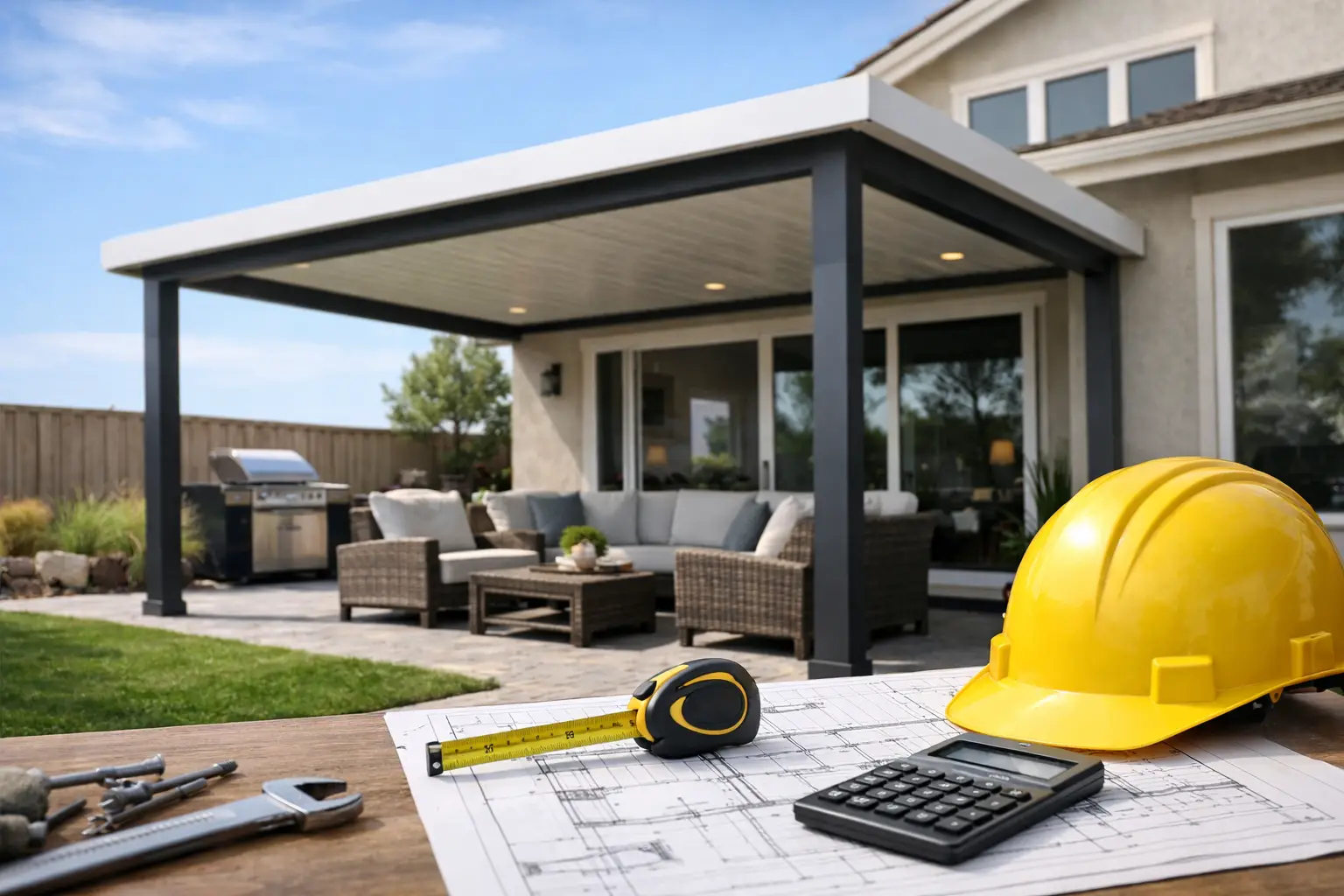
Patio Cover Installation Cost Explained
Estimated reading time: 7 minutes

A patio cover can completely change how a backyard works. It adds shade, comfort, and structure, but patio cover installation cost is rarely a one-line number. The final investment depends on the type of cover, the design ambition, the site conditions, and how cleanly the entire project is planned from the start.
For homeowners investing in a higher-end outdoor space, the real question is not just what a patio cover costs. It is what level of performance, finish, and long-term value you want from it. A basic shade structure and a fully integrated architectural cover may both serve the same general purpose, but they do not deliver the same result.
What affects patio cover installation cost
The biggest factor is the type of structure being built. A simple attached cover with a straightforward roofline will usually require less labor and fewer custom details than a freestanding cover with upgraded finishes, built-in lighting, and coordinated hardscape below. Material choice also matters. Aluminum, wood, and insulated roof systems each come with different labor demands, maintenance needs, and visual impact.
Size is the next obvious driver, but square footage alone does not tell the whole story. Two patio covers with similar dimensions can land in very different budget ranges if one requires structural engineering, new footings, electrical work, demolition, or integration with an existing outdoor kitchen or poolside layout.
In Southern California, permitting and code compliance are also part of the equation. That is especially true when the cover is attached to the home, includes fans or recessed lighting, or is being built as part of a larger backyard renovation. A professional plan set and clear scope can prevent costly changes once construction begins.
Patio cover installation cost by material and design
Material selection shapes both price and presence. If your goal is to create a polished, resort-style outdoor environment, the look of the finished structure matters just as much as the function.
Aluminum patio covers
Aluminum is often chosen for durability and lower maintenance. It can be a practical solution for homeowners who want reliable shade without the upkeep of natural wood. It also installs efficiently in many cases, which can help reduce labor complexity.
That said, not all aluminum systems feel premium. Some look clean and modern, while others can feel lightweight or builder-grade if the design is too basic. The finish quality, beam profile, and integration with the rest of the backyard make a major difference.
Wood patio covers
Wood remains a favorite for custom outdoor design because it adds warmth and architectural character. It can be stained or painted to match the home and often works well in upscale backyards where detail matters. A wood cover can feel far more custom than a standard kit-based structure.
The trade-off is maintenance and labor intensity. Wood structures usually involve more craftsmanship, more finishing work, and more long-term upkeep. If you want a refined result, corners cannot be cut during construction.
Insulated roof patio covers
Insulated roof systems are popular when homeowners want stronger sun protection and a more substantial feel overhead. These covers can help with heat control and create a more comfortable outdoor room effect, especially in hot, sunny climates.
Because they are more engineered and often paired with electrical upgrades, their installation is typically more involved. They can be an excellent choice when the patio cover is meant to support year-round entertaining rather than occasional shade.
Louvered and custom architectural covers
At the higher end, custom patio covers may include motorized louvers, integrated drainage, statement columns, premium lighting, heaters, or a design that ties directly into a larger exterior remodel. These are not commodity builds. They are tailored outdoor structures designed to elevate the entire property.
This is where patio cover installation cost climbs quickly, but this is also where design value becomes obvious. A cover that looks intentionally built with the home usually feels like an asset. A cover that looks added on as an afterthought often does not.
The hidden costs homeowners miss
Many homeowners start by pricing the visible structure and overlook everything around it. In reality, installation cost often expands because of the prep work, supporting trades, and finish coordination required for a clean result.
Footings are one example. Depending on soil conditions, span requirements, and engineering, the structural support may be more substantial than expected. Electrical is another. Once homeowners decide they want lighting, a ceiling fan, outdoor speakers, or heaters, the scope changes.
Demolition and site access can also affect the budget. If an old patio, planter, or overhead structure needs to be removed first, or if crews have limited access to the backyard, labor requirements increase. Even finish details such as paint matching, stucco patching, drainage correction, and tying new materials into existing hardscape can move the project into a different category.
That is why transparent scoping matters. A vague estimate may look attractive at first, but it often leaves room for surprises once construction starts.
How patio cover installation cost changes with project goals
Not every homeowner wants the same thing, and cost follows intention. If your priority is simple shade over a modest seating area, the design can stay relatively streamlined. If your goal is to create a full outdoor living zone with a dining area, lounge space, and visual continuity with the home, the scope becomes more sophisticated.
This is where a design-build approach can protect the investment. When the patio cover is planned alongside pavers, lighting, landscape layout, and traffic flow, the final result feels cohesive. When it is planned in isolation, homeowners often end up revisiting the same area later to fix what was missed the first time.
For example, a patio cover positioned without considering sun angles may not provide the shade expected. A cover built without enough ceiling height can feel heavy. One installed over an outdated concrete slab may make the space more usable but still not make it feel finished. Good design solves these issues before construction begins.
Budgeting realistically for a patio cover
A smart budget starts with priorities. Decide what matters most: architectural appearance, maximum shade, low maintenance, integrated lighting, or a future-ready structure that can support additional outdoor upgrades later. That helps narrow the right system instead of comparing unlike options.
It also helps to think beyond the initial build. The cheapest route is not always the most economical if it leads to maintenance issues, design regret, or a structure that does not complement the property. Homeowners with higher-end homes usually benefit from choosing a patio cover that matches the standard of the residence rather than settling for a mismatched add-on.
In markets like Los Angeles, design quality has real value. Outdoor living is not a side feature here. It is part of how the home is enjoyed, how it photographs, and how it presents overall. A well-executed patio cover can support daily comfort while making the entire backyard feel more intentional.
How to compare contractor proposals
The right proposal should be detailed enough to tell you exactly what is included. That means structure type, materials, finishes, attachment method, footing scope, electrical inclusions if applicable, permit handling, and cleanup. If those items are not clearly spelled out, the estimate may not be telling the full story.
You should also pay attention to process. A contractor who can guide design, code requirements, and construction under one managed system usually creates a smoother experience than one who treats the project as a basic installation. That matters even more when the patio cover is tied to a broader outdoor remodel.
Build Up Remodeling Inc approaches these projects with that bigger picture in mind. For homeowners who want more than a shade structure, planning, detailing, and execution are what separate a good-looking result from an expensive compromise.
When a patio cover is worth the investment
A patio cover tends to deliver the best value when it solves both function and finish. It should make the space cooler, more usable, and more visually complete. If it only checks one of those boxes, the return can feel limited.
The strongest projects usually share the same traits. The scale fits the home. The materials feel intentional. The structure works with the backyard layout rather than fighting it. And the scope is clearly defined before work begins.
If you are evaluating patio cover installation cost, do not focus only on the base structure. Focus on what the finished space will actually feel like when the project is done. The right patio cover does more than create shade. It gives your outdoor space a center of gravity.
Get Started
Send us a brief message and let’s work together.
"*" indicates required fields
We try our best to reach out in less then 24 Hours.