
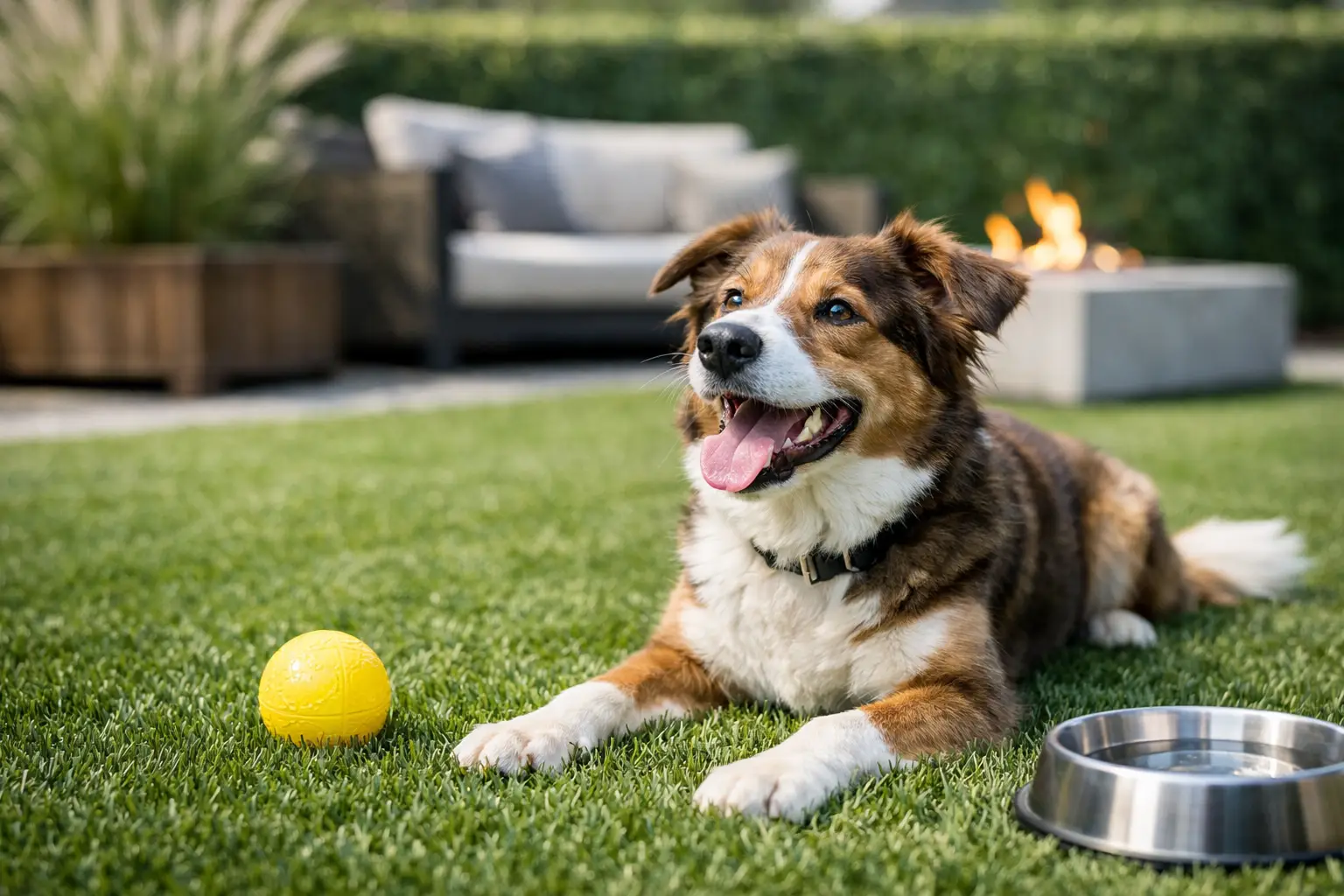
Artificial Turf for Dogs That Holds Up

Estimated reading time: 7 minutes
A beautiful yard stops feeling luxurious the moment it turns into a muddy dog run. Worn grass, yellow spots, tracked-in dirt, and lingering odors can quickly take over an outdoor space that was supposed to feel polished and easy to enjoy. That is exactly why artificial turf for dogs has become such a smart upgrade for homeowners who want a cleaner yard without giving up comfort, design, or durability.
The key is understanding that pet turf is not just standard synthetic grass dropped into a backyard. If the system is not designed for drainage, sanitation, and heavy use, it can become a maintenance problem disguised as a solution. When it is planned and installed correctly, though, it gives you a yard that looks sharp, feels comfortable underfoot, and stands up to daily use from both pets and people.
Why artificial turf for dogs works so well
Natural grass struggles with repetition. Dogs tend to follow the same path, claim the same bathroom areas, and create concentrated wear in a way that quickly exposes bare dirt. In Southern California, that problem gets worse because heat, water restrictions, and dry conditions already put pressure on natural lawns.
Artificial turf solves a lot of those pain points at once. It keeps the surface consistent, so there are no mud patches after watering and no weak areas that get chewed up after a week of active use. It also makes the yard easier to keep visually clean, which matters if your outdoor space is designed for entertaining, family time, or simply maintaining a higher-end look from the patio to the fence line.
For many homeowners, the appeal is not only about the dog. It is about protecting the overall design of the property. A yard can have premium pavers, a pool, a custom patio cover, and carefully selected planting, but if the lawn looks damaged and smells off, the whole space loses its finish.
Not all pet turf systems are the same
This is where many projects go wrong. Homeowners hear “pet-friendly turf” and assume every product performs the same way. It does not.
The turf itself matters, but the bigger difference is usually in the system underneath. Dogs create frequent moisture exposure, concentrated bathroom use, and repeated traffic in certain zones. A surface that looks good in a showroom may fail in a real backyard if the base, drainage, and installation standards are not built around those conditions.
Drainage is the first priority
If artificial turf for dogs cannot drain fast, odors have a chance to settle in. Good pet systems are designed to move liquid through the turf and into a properly prepared base below. That base should support quick drainage while staying stable over time.
This is one of those details homeowners rarely see once the project is complete, but it affects the long-term result more than the grass blade color or pile height. A premium finish starts below the surface.
Material quality affects comfort and appearance
Dogs do not care about marketing language, but they absolutely respond to heat, texture, and traction. Turf that is too coarse can feel unpleasant. Turf that is too thin can look flat and cheap. Turf that lacks resilience can mat down quickly in the paths where your dog runs or rests.
A better product balances realism with performance. It should feel soft enough for everyday use while still holding its shape. For homes with children and pets sharing the same yard, that balance matters even more.
Infill choices matter more than most people expect
Infill helps support the turf blades, contributes to drainage, and affects surface feel. For pet areas, the wrong infill can hold odors or create more maintenance than expected. The right choice depends on how the yard is used, how much direct sun it gets, and whether the turf area is a dedicated dog run or part of a larger outdoor living layout.
There is no single answer for every property. A compact side yard for two active dogs has different demands than a large backyard where the dog uses only one corner of the lawn.
What to look for before installing pet turf
A dog-friendly lawn should do more than survive your pet. It should work with the architecture and lifestyle of the home.
Start with how the space functions day to day. If your dog races the fence line, that route may need reinforced planning and a blade style that can recover well from repeated traffic. If you have a small breed that mostly uses a designated bathroom area, the focus may be more on drainage and easy rinse-down maintenance. If the turf is part of a luxury backyard with a pool, lounge area, and outdoor kitchen, the visual integration matters just as much as the pet performance.
That is why good design-build planning is valuable here. The best result is not simply a pet patch. It is an outdoor environment where the turf feels intentional, polished, and aligned with the rest of the remodel.
The real maintenance expectations
One reason homeowners choose artificial turf for dogs is to reduce yard work. That benefit is real, but it should be framed correctly. Artificial turf is lower maintenance, not no maintenance.
You will still want to remove solid waste promptly, rinse the surface periodically, and keep the area free of leaves or debris. In pet-heavy zones, occasional deeper cleaning helps preserve freshness. The upside is that these tasks are straightforward and predictable. You are not reseeding dead grass, dealing with mud, or trying to reverse urine burn damage every few weeks.
For many busy households, that consistency is the real luxury. The yard stays usable and presentable without becoming another recurring project.
Heat, hygiene, and other honest trade-offs
A polished article should also be honest about what depends on the property.
Turf can get warm in direct summer sun. That does not automatically make it a bad choice, but it does mean design planning matters. Shade structures, surrounding hardscape, tree placement, and product selection all influence comfort. In some yards, adding covered areas or balancing turf with pavers and planting beds creates a much better overall result than covering every square foot with synthetic grass.
Hygiene also depends on usage. A household with one small dog will have a different cleaning routine than a property with several large dogs. If a dog consistently uses one area, that zone may benefit from more frequent rinsing or a dedicated layout strategy. The solution is not avoiding turf. It is building the right system and setting realistic upkeep habits from the start.
There is also the matter of aesthetics. Some homeowners want the yard to look perfectly uniform year-round. Others prefer a more mixed landscape with turf as one component among planters, stonework, and entertainment areas. Both approaches can work. The right choice depends on the architecture of the home and how you actually live outside.
Where pet turf makes the biggest difference
The most effective installations are often not the most obvious ones. A side yard that currently turns muddy every time the dog goes out can become clean, usable, and easy to wash down. A damaged backyard lawn can be transformed into a durable central play area that still complements a high-end patio and landscape design. Even smaller spaces benefit when they are treated as part of the home rather than afterthought utility zones.
For homeowners in Los Angeles, where outdoor living is part of the property value equation, this matters. A yard should be able to handle pets without looking like it is built around damage control. The goal is a space that supports daily life and still feels refined enough for guests.
Why installation quality decides the outcome
This is not a project where cutting corners stays hidden for long. Poor grading, weak drainage planning, or rushed seam work will show up in the form of odor issues, uneven surfaces, visible wear, and a finish that never quite looks integrated.
Professional installation is what turns artificial turf from a surface product into a lasting outdoor system. That includes excavation, base preparation, compaction, drainage planning, precise fitting, and clean edge detailing. It also includes understanding how the turf connects to surrounding features like pavers, retaining walls, patios, and planting areas.
That level of execution is especially important in higher-end homes, where every material is expected to contribute to a cohesive result. Turf should not look dropped in. It should look designed.
If you are considering artificial turf for dogs, the smartest approach is to think beyond the grass itself. Focus on how the yard should perform, how it should clean up, and how it should look a year from now, not just on installation day. When those decisions are made carefully, you get more than a dog-friendly surface. You get an outdoor space that stays composed, functional, and worthy of the home around it.
Get Started
Send us a brief message and let’s work together.
"*" indicates required fields
We try our best to reach out in less then 24 Hours.