
Best Turf for Kids: What to Look For
Estimated reading time: 7 minutes

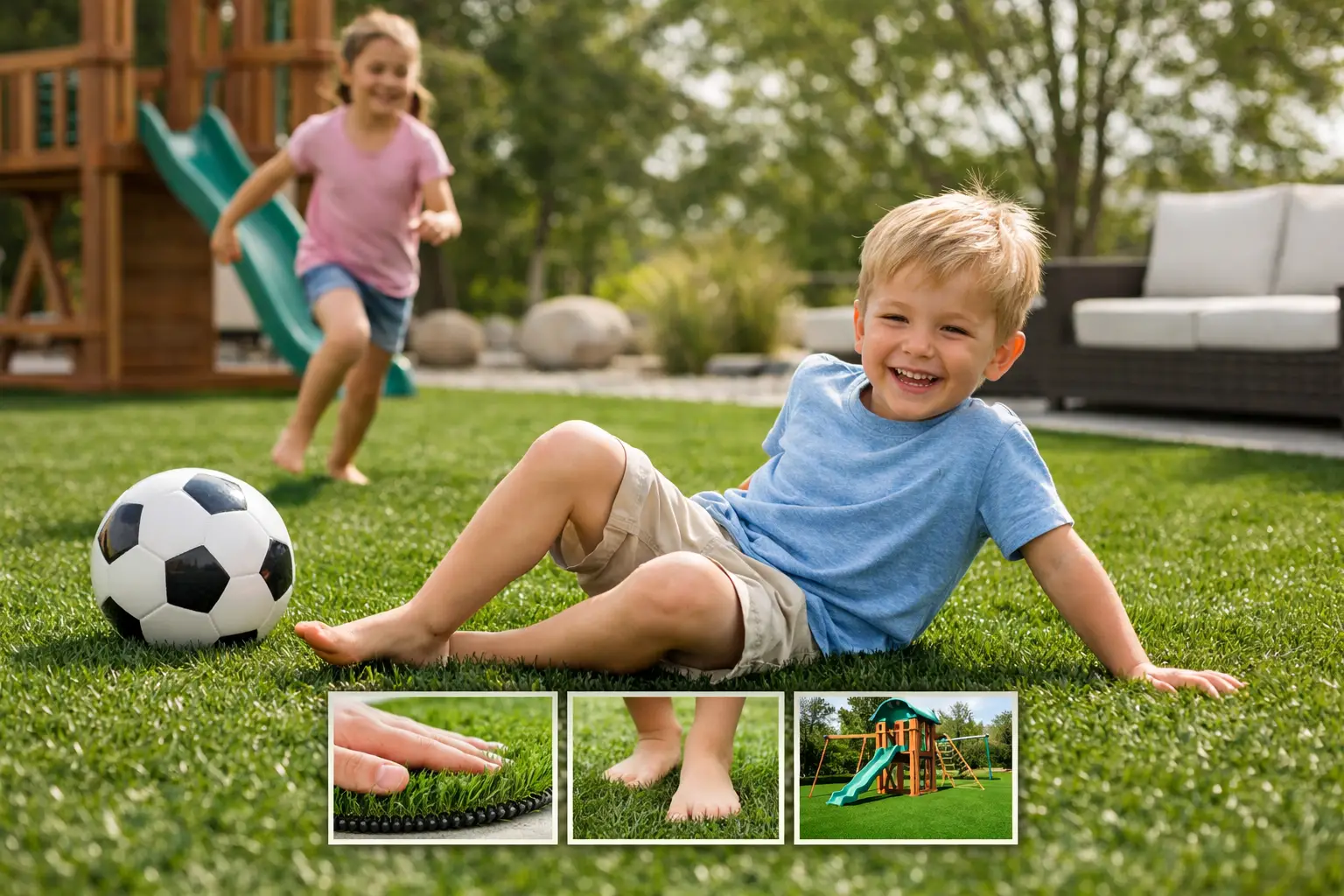
A backyard can look flawless in photos and still fail the real test by 4 p.m. when kids are sprinting, sliding, and hitting the ground hard. If you are choosing the best turf for kids, appearance matters, but performance matters more. The right turf should feel soft underfoot, drain fast, stay cleaner than natural grass, and hold up to daily family use without turning your yard into a maintenance project.
For families investing in a high-end outdoor space, turf is not just a surface choice. It is part safety feature, part design element, and part lifestyle upgrade. That means the best decision usually comes from looking past color swatches and focusing on how the system is built from the ground up.
What makes the best turf for kids?
The best turf for kids combines three things: impact comfort, durability, and cleanliness. If one of those is missing, the lawn may still look attractive, but it will not perform the way a family yard should.
Softness is the first thing most homeowners ask about, and for good reason. Kids fall. They kneel. They play tag barefoot. A turf product with a pleasant hand feel and a properly engineered underlayer will create a more forgiving play surface than a stiff, low-grade installation. But softness alone is not enough. Some ultra-soft turf products flatten too quickly in high-traffic areas, especially where children run the same path every day.
That is why durability matters just as much. Good family turf needs resilient blade construction, enough density to recover after use, and a system that stays stable over time. A premium installation should not develop dips, ripples, or compacted dead zones a season later.
Then there is cleanliness. One of the biggest reasons Southern California homeowners move to artificial turf is to cut down on mud, dust, patchy growth, and constant upkeep. For households with children, that benefit is even bigger. Less dirt tracked inside. Fewer wet grass stains. Fewer muddy shoes after play.
Safety starts below the surface
When people shop for turf, they often focus on the visible product and ignore the sub-base and padding. That is a mistake. The surface fibers matter, but the layer underneath often has a greater impact on comfort and safety.
If your main priority is creating a kid-friendly yard, ask how the area will be prepared and whether a cushioned pad makes sense for the layout. In a dedicated play zone, adding the right padding can reduce the harshness of falls and create a more supportive surface for younger children. In a decorative side yard with light use, that extra layer may not be necessary.
This is where one-size-fits-all advice breaks down. The best turf for kids in a backyard playground is not always the same product you would choose around a pool, under patio sightlines, or across a front yard meant mostly for curb appeal. Each area has a different performance standard.
A well-built base also affects drainage, surface temperature, and long-term stability. When the installation is rushed or underspecified, even premium turf can underperform. For families making a serious investment in their outdoor space, system quality should never be treated as an afterthought.
Blade shape, pile height, and density all matter
Not all artificial turf feels or behaves the same. Three product details have an outsized effect on how well a lawn performs for children.
Pile height is the first. A taller pile can look lush and luxurious, but if it is too tall for the application, it may mat down more easily in active areas. A shorter or mid-height turf often performs better in play spaces because it offers a cleaner, more stable feel under constant movement. That said, going too short can make the yard feel hard and less natural. The sweet spot is usually a balance between softness and resilience.
Blade shape is next. Some turf fibers are designed to spring back better after foot traffic, while others prioritize a softer touch. Families usually benefit from a product that leans slightly toward recovery and durability without feeling abrasive. You want a lawn that still looks refined after repeated use, not one that looks worn in the middle six months after installation.
Density is the third factor. A denser turf system tends to feel fuller and more substantial, and it can help support active use. It also contributes to a more premium appearance. The trade-off is that very dense systems can retain a bit more heat than lighter products, which may matter in full-sun Southern California yards.
Drainage is not optional
A family lawn should be ready to use soon after watering, rinsing, or rain. That is why drainage is one of the most practical features to evaluate.
The best turf for kids should allow water to move through efficiently so the surface dries quickly and stays more sanitary. This is especially important if you have pets, frequent playtime, or areas where snacks, sports drinks, and outdoor messes are part of daily life. Faster drainage helps the yard stay usable and easier to clean.
Drainage performance depends on both the turf backing and the base preparation underneath. If either one is weak, puddling can show up in low spots and create avoidable maintenance issues. In premium backyard design, this is not just a technical detail. It directly affects how enjoyable the space feels to use.
Heat matters in Southern California
This is one of the biggest questions parents ask, and they should. Artificial turf can get warm in direct sun, especially during peak summer afternoons. Anyone promising otherwise is oversimplifying the issue.
That does not mean turf is a bad choice for families. It means the product, color, yard orientation, and overall design should be considered together. Some turf systems are built to manage heat better than others. Lighter color blends can help somewhat, and shaded zones from patio covers, trees, or strategic design elements can make a significant difference in comfort.
It also helps to be realistic about how the yard is used. If your children are typically outside in the morning, early evening, or shoulder seasons, heat may be less of a concern than durability and cleanliness. If they spend long stretches playing in full sun in midsummer, heat reduction should be part of the planning conversation from the beginning.
The cleanest turf is usually the best long-term choice
A good family yard should not feel high maintenance. One of turf’s biggest advantages is that it removes many of the problems natural grass creates, but product quality and installation details still affect how clean the yard stays.
Premium turf systems are easier to rinse, easier to brush when needed, and less likely to trap debris deep in the fibers. That matters when your kids are sitting on the lawn, playing with toys, or going from backyard to kitchen in one nonstop loop.
Infill selection also plays a role. The right infill helps support the blades, contributes to performance, and can influence comfort. Depending on the yard’s use, there may be trade-offs between softness, heat behavior, and maintenance needs. This is another reason an experienced design-build contractor adds value. The best answer depends on how your family actually uses the space, not just what looks good in a sample box.
Design still counts
Function leads the decision, but aesthetics should not be dismissed. In an upscale outdoor remodel, turf has to do more than survive playtime. It should complement the architecture of the home, connect naturally with pavers, pool decking, planters, and entertaining areas, and maintain a polished appearance year-round.
That is where premium turf stands apart. Better color variation, more natural blade texture, and cleaner finishing work create a lawn that feels intentional rather than artificial. For homeowners investing in a full backyard transformation, that distinction matters. You are not adding turf just to replace grass. You are shaping how the entire property looks and functions.
At Build Up Remodeling, that is usually the difference between a yard that simply checks a box and one that truly works for family living.
How to choose with confidence
If you are comparing options, do not ask only which turf is softest or which one looks most realistic. Ask which system is best for the way your kids actually use the yard. Do they need space for open play? Are you creating a side-yard runaround zone? Will the turf sit next to a pool, outdoor kitchen, or lounge area? Will pets share the same space?
The right recommendation should account for all of that. It should also include clear planning around grading, drainage, edge detail, and transitions to surrounding hardscape. Those are the details that separate a surface that merely looks attractive on day one from one that performs beautifully for years.
For most families, the best turf for kids is the one that feels comfortable, drains well, handles heavy use, and fits the overall design of the home. Not the softest sample in the showroom. Not the cheapest option. The one that was selected and installed with real life in mind.
A well-designed backyard should give your children room to play hard and give you one less thing to worry about.
Get Started
Send us a brief message and let’s work together.
"*" indicates required fields
We try our best to reach out in less then 24 Hours.