
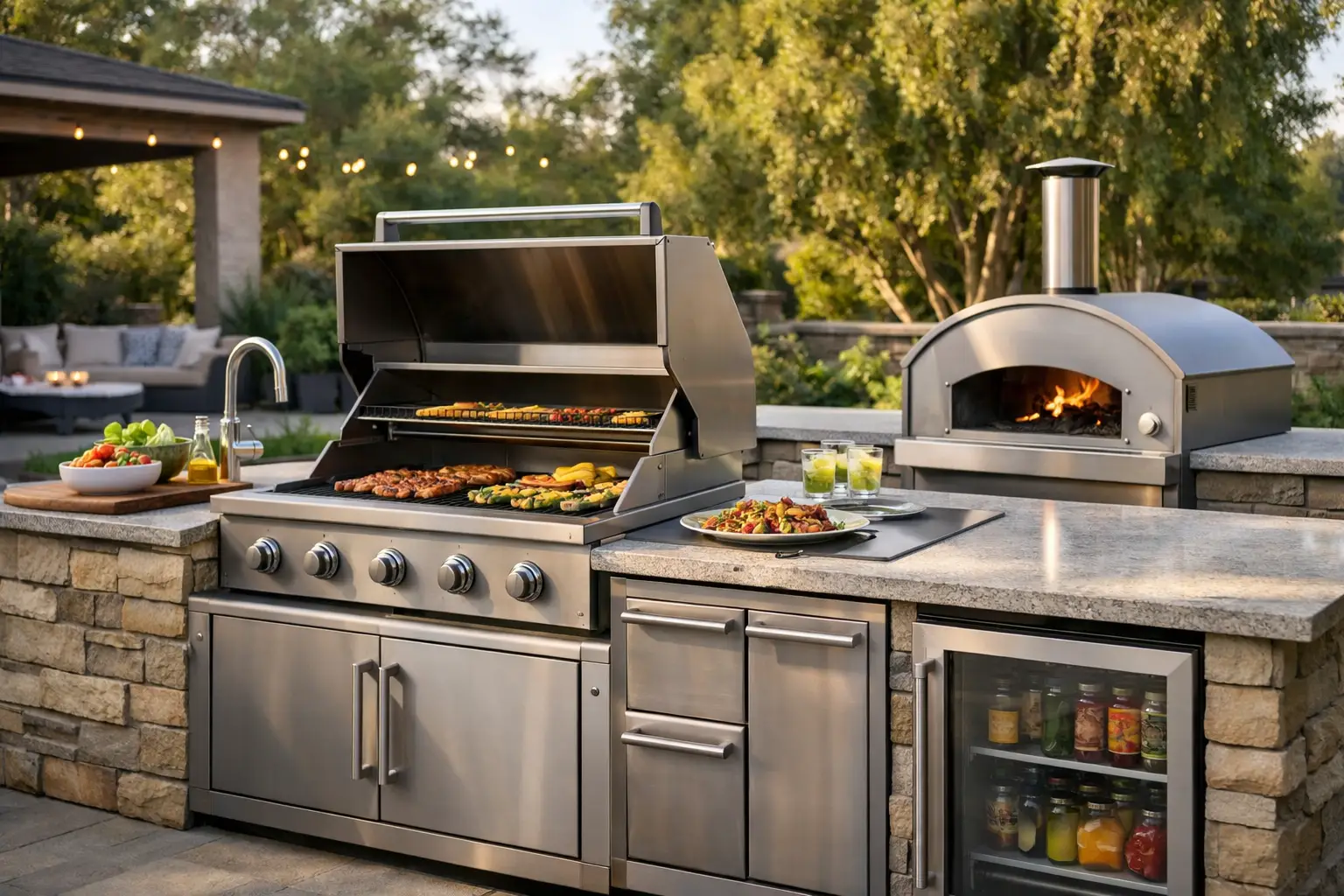
Outdoor Kitchen Planning Guide for Homeowners

Estimated reading time: 7 minutes
A luxury outdoor kitchen fails long before the first grill is installed. It fails when the layout ignores traffic flow, when the finish selection looks great in a showroom but struggles outdoors, or when the plan skips over gas, power, drainage, and shade until construction is already underway. That is exactly why an outdoor kitchen planning guide matters. If you want a space that feels polished, performs well, and adds real value to your home, the planning stage is where the outcome is won.
For homeowners investing in a high-end backyard, an outdoor kitchen is rarely a standalone feature. It usually sits inside a larger vision that includes a patio, pool, lounge area, fire feature, or covered entertaining space. That broader context changes every decision. The right kitchen does not just hold appliances. It supports the way your household lives, entertains, and moves through the yard.
What a good outdoor kitchen planning guide should solve
A strong plan answers practical questions before they turn into expensive revisions. Where will guests gather while someone is cooking? How far is the kitchen from the indoor kitchen? Will smoke drift toward seating areas or back into the house? Is there enough prep surface, storage, and task lighting to make the space useful after sunset?
These details separate a backyard that looks complete from one that actually works. Homeowners often focus first on the grill, but the grill is only one part of the experience. A well-designed outdoor kitchen also accounts for circulation, comfort, weather exposure, cleanup, and visual balance with the rest of the property.
That is especially true in Southern California, where outdoor living is not occasional. It is part of daily life. A kitchen that gets frequent use needs more than attractive stone and premium appliances. It needs a layout that feels natural on a busy weekend and durable materials that hold up through sun, heat, and year-round entertaining.
Start with how you actually use your backyard
Before choosing finishes or built-in features, define the kitchen’s role. Some homeowners want a compact grilling station near the patio door for weeknight dinners. Others want a full entertaining zone with bar seating, refrigeration, sink access, warming drawers, and a nearby dining terrace. Neither approach is better. The right choice depends on use.
If you host often, your plan should prioritize guest flow and social interaction. That may mean keeping the cook facing the seating area instead of turning toward a wall. If your household values family meals and convenience, shorter walking distances between the house and the outdoor kitchen may matter more than adding every possible upgrade.
There is always a trade-off. A larger kitchen delivers more function, but it also requires more patio area, more utility coordination, and more visual discipline. Bigger is not automatically better. Better is a kitchen sized correctly for the property and the way you live.
Layout comes before appliances
One of the most common planning mistakes is picking appliances first and trying to force a layout around them. That usually creates awkward spacing, limited prep room, and a kitchen that feels crowded even when it is large.
A better approach is to think in zones. You need a cooking zone, a prep zone, a serving zone, and enough landing space between them. If a sink is included, cleanup should have its own clear area instead of interrupting prep space. If bar seating is part of the design, guests should be close enough to interact but not so close that they block access to the grill.
An L-shape works well for many homes because it creates clear separation between cooking and entertaining. A straight run can be efficient in tighter footprints, especially when paired with a dining or lounge area nearby. A U-shape offers strong function, but it needs room to breathe. In a compact yard, it can feel too enclosed.
This is where professional design makes a difference. A clean rendering may look impressive, but construction-ready planning needs dimensions, clearances, and utility logic behind the visuals. Build Up Remodeling approaches these spaces as part of a full outdoor environment, which is often the difference between a kitchen that looks expensive and one that truly feels custom.
Choose the location carefully
Placement affects everything from convenience to long-term enjoyment. A kitchen too far from the house can become inefficient, especially when carrying food, supplies, or serving pieces. A kitchen too close to doors or windows may create congestion or ventilation issues.
Sightlines matter too. In many upscale backyards, the outdoor kitchen is visible from the home interior. That means it should feel architecturally connected to the house and surrounding hardscape. It should not read like an afterthought placed against a fence.
You should also consider sun exposure, prevailing wind, and proximity to the pool or lounge area. Full sun may be fine for the patio but uncomfortable for a cooking station in midsummer. In some cases, a patio cover, pergola, or partial shade structure makes the kitchen more usable and protects finishes over time.
Utilities are where planning gets serious
The most beautiful design can fall apart fast if utility planning is weak. Gas, electric, and water need to be coordinated early, not squeezed in after appliance selections are finalized. This affects scope, timeline, and what is realistically possible in a given location.
For example, adding a sink increases convenience, but it also adds plumbing requirements and drainage considerations. Outdoor refrigeration improves functionality, but it needs proper electrical planning and ventilation. Lighting should include both task lighting and ambient lighting, especially if the kitchen is part of an evening entertaining space.
This is also where transparency matters. Homeowners making a premium investment do not want vague allowances or surprises once demolition begins. A detailed scope at the start creates clarity about what is being built, how it will function, and how the entire project fits together.
Materials should match the environment
An outdoor kitchen is exposed to conditions that indoor cabinetry and finishes never face. Heat, UV exposure, moisture, and temperature swings all affect performance. That is why material selection has to go beyond appearance.
Countertops need to handle outdoor wear while still delivering a refined look. Cabinetry and built-ins should be specified for exterior use. Finish choices should work with the home’s architecture, surrounding pavers, coping, walls, and patio surfaces so the kitchen feels integrated rather than visually isolated.
There is also a style decision to make. Some homeowners want a clean modern look with sharp lines and restrained color contrast. Others want a warmer resort-style feel with richer textures and softer transitions. Both can work beautifully, but consistency matters. Mixing too many materials or trying to follow every trend often dates a project faster than a more disciplined design approach.
Storage, seating, and lighting are not secondary details
The kitchens that get used most are usually the ones that handle the small frustrations well. That means practical storage for tools and serving pieces, enough counter space near the grill, and lighting that makes the space functional after dark.
Seating deserves the same level of thought. Bar seating can energize the kitchen and turn cooking into a social experience, but it needs the right spacing and orientation. If every seat faces a wall or sits directly in the heat zone, it will look better than it functions. Dining space nearby may offer a better experience for some families than trying to crowd all seating into the kitchen itself.
Lighting should support both safety and atmosphere. Bright task lighting near cooking areas is essential, but it should be balanced with softer ambient lighting across the patio so the entire space feels intentional at night.
Think beyond the kitchen itself
The best outdoor kitchens are part of a complete backyard plan. If the patio surface, drainage strategy, shade design, and circulation paths are handled separately, the final result can feel fragmented. When those elements are designed together, the space feels larger, cleaner, and more valuable.
That integrated approach is especially important for homeowners planning a larger outdoor transformation. A kitchen may anchor the space, but its success depends on how well it connects to the lounge area, pool deck, fire feature, and access points back to the home. Design-build coordination helps avoid the stop-and-start process that often leads to mismatched finishes, unclear responsibilities, and preventable delays.
Outdoor kitchen planning guide: when to bring in a professional
If your project includes built-in appliances, utility work, hardscape changes, or structural shade elements, professional planning is the smart move. At that level, this is not a weekend upgrade. It is a construction project that affects function, safety, appearance, and property value.
The right team should be able to show you more than inspiration photos. You want design clarity, a defined scope, material guidance, and a managed process from concept through construction. That is what gives homeowners confidence to make larger decisions without second-guessing every step.
A well-planned outdoor kitchen should feel effortless once complete. Guests should not notice the utility coordination, the circulation planning, or the finish hierarchy. They should just notice that the space works, looks exceptional, and feels like it belongs there. That kind of result does not happen by chance. It starts with a plan strong enough to support the lifestyle you want to build outdoors.
Get Started
Send us a brief message and let’s work together.
"*" indicates required fields
We try our best to reach out in less then 24 Hours.