
New Pool Construction Process Explained
Estimated reading time: 8 minutes

A beautiful pool does not start with digging. It starts with decisions that shape everything afterward – size, placement, elevation, materials, drainage, and how the pool will actually fit the way you live. The new pool construction process is not just a build sequence. It is a design, engineering, and project management effort that determines whether your backyard feels custom and polished or rushed and pieced together.
For homeowners investing in a high-end outdoor space, that distinction matters. A pool is rarely a stand-alone feature. It affects your patio layout, outdoor kitchen placement, fire features, lighting plan, turf areas, privacy design, and the overall flow of the yard. When the process is handled correctly from day one, the result feels intentional. When it is not, delays, change orders, and layout compromises tend to show up fast.
What the new pool construction process really involves
Many homeowners expect the process to be simple: design the pool, get permits, dig the hole, and finish the surface. In reality, each stage influences the next, and early decisions carry real consequences later in the build.
A well-managed project typically begins with a site evaluation and design phase. That is where the team studies the property, identifies grade changes, checks access, reviews setback requirements, and starts shaping the pool around the home rather than dropping it into the yard as an afterthought. In Southern California, this stage is especially important because lot conditions vary widely. Some yards are flat and straightforward. Others involve tight access, sloped terrain, retaining needs, or existing hardscape that must tie into the new build cleanly.
From there, the process moves into engineering and permitting. This part is not glamorous, but it protects the project. Structural plans, equipment layout, and code compliance all need to be addressed before construction starts. A polished design means very little if the project is not buildable under local requirements.
Step 1: Design the pool around the property and lifestyle
The strongest pool projects begin with function, not just appearance. Homeowners often come in with inspiration photos, and that is useful, but the better question is how the space needs to perform. Is the pool mainly for family use, entertaining, exercise, or a resort-style visual centerpiece? Will there be a spa, baja shelf, raised walls, water features, or surrounding lounge areas? Does the yard also need room for kids, pets, or an outdoor dining zone?
Those answers affect dimensions, circulation, and material choices. A narrow modern lap-style pool creates a different backyard experience than a freeform family pool with integrated lounging features. Neither is automatically better. It depends on the home, the lot, and the homeowner’s priorities.
This is also the stage where 3D design can make a major difference. Plans on paper are useful, but homeowners make stronger decisions when they can actually visualize elevations, deck space, sight lines, and how the pool connects to the rest of the backyard. That clarity reduces guesswork and helps avoid mid-project revisions.
Step 2: Engineering and permits set the foundation
Once the design direction is approved, the technical phase begins. Engineering plans account for structural integrity, soil conditions, plumbing runs, drainage, and equipment needs. If the project includes retaining walls, raised bond beams, slope management, or integrated hardscape, the planning becomes even more detailed.
Permits can take time, and homeowners should expect that. The exact timeline depends on the city, project scope, and property conditions. This is one reason experienced project management matters. A contractor who is organized at the front end can keep paperwork moving and reduce avoidable delays.
This stage is where transparency matters most. Homeowners should know what has been approved, what is pending, and what milestones need to happen before crews arrive. Clear communication here sets the tone for the rest of the job.
Step 3: Layout and excavation begin the physical build
After permits are in place, construction starts with layout. The pool shape is marked on the site so dimensions, elevations, and positioning can be confirmed in real space. This step may look simple, but it is one of the most important checkpoints in the entire project. A few inches can change deck space, drainage direction, or the relationship between the pool and nearby structures.
Excavation follows. Heavy equipment removes soil and establishes the rough form of the pool. In some yards, this goes quickly. In others, access limits, buried utilities, or challenging soil conditions can slow things down. This is one of the biggest it-depends moments in the new pool construction process. The cleaner the access and the simpler the site, the smoother this phase tends to be.
During excavation, homeowners often get their first real sense of scale. Sometimes the pool feels larger than expected, sometimes smaller. That is normal. Raw excavation never looks refined, and the finished experience only comes together as the structure, decking, and landscape elements are added.
Step 4: Steel, plumbing, and electrical create the system
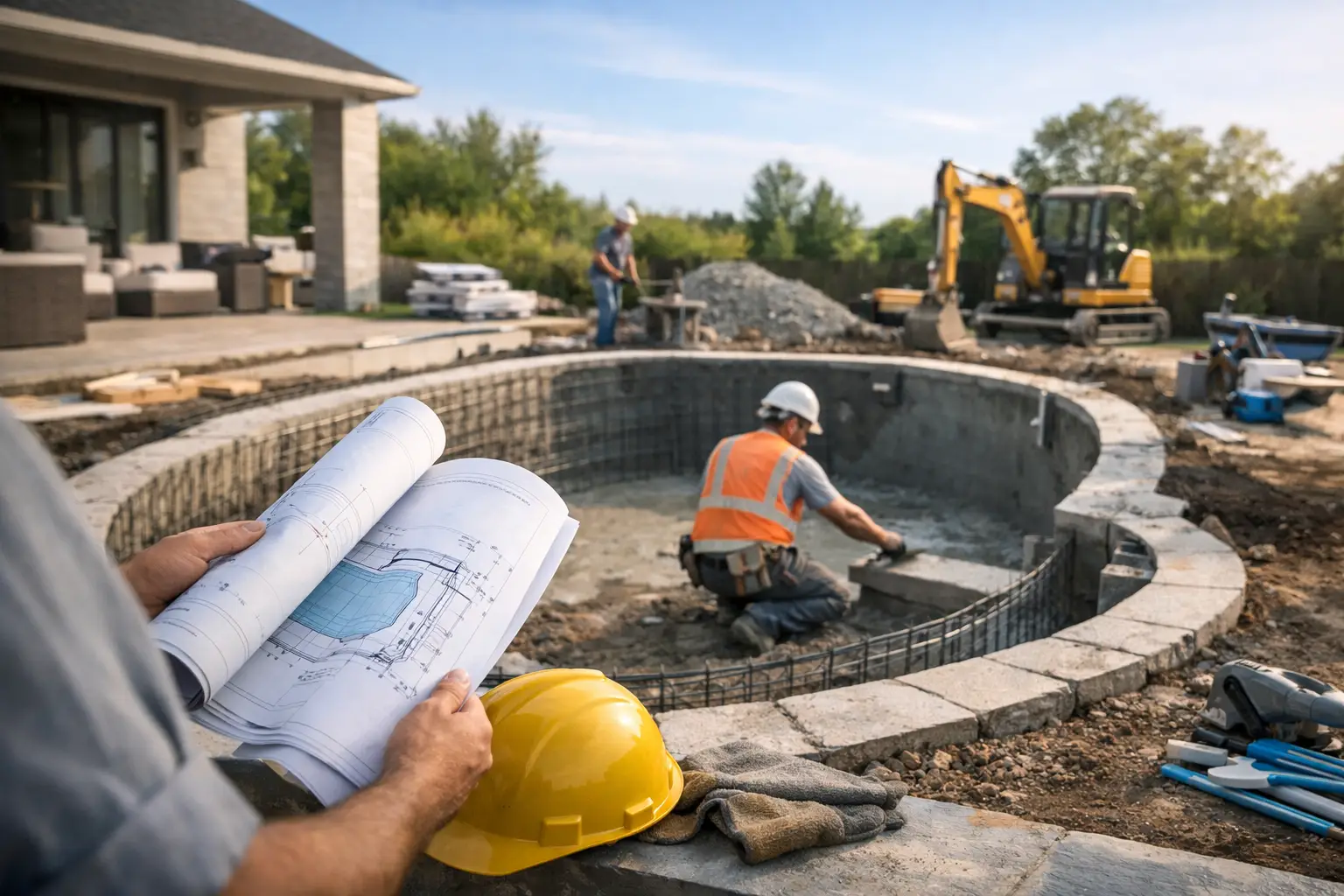
Once excavation is complete, the shell is reinforced with steel rebar based on the engineered plans. This framework gives the pool its structural strength. After that, the plumbing and electrical systems are installed.
This stage determines how well the pool performs over time. Circulation, filtration, heating, lighting, automation, and water feature operation all depend on proper system design and execution. For homeowners building a premium backyard, this is not the place to cut corners. The visible finish matters, but the hidden infrastructure is what makes the pool efficient, comfortable, and easier to maintain.
Equipment selection also matters here. Some homeowners want a straightforward setup. Others want app-based control, integrated spa heating, LED lighting scenes, or more advanced water management features. The right setup depends on usage goals. More features can add convenience and luxury, but they also require thoughtful planning and proper installation.
Step 5: Shotcrete forms the shell
After inspections for steel, plumbing, and electrical, the shell is typically formed with shotcrete. This creates the structural body of the pool. Once applied, the shell needs time to cure properly.
Homeowners are often surprised that this phase is both dramatic and technical. It is exciting because the pool suddenly looks real. It is technical because shell quality, shaping accuracy, and curing discipline all affect long-term durability. A strong shell is not about speed. It is about doing it right.
At this point, the backyard can still look rough. That is part of the process. The transformation usually becomes more visible during finish work, when tile, coping, decking, and surrounding hardscape begin tying the space together.
Step 6: Tile, coping, decking, and finish work define the look
This is the stage where the project shifts from construction site to finished environment. Waterline tile, coping, interior finish, pavers, concrete work, turf transitions, and feature walls all come together here.
It is also where design discipline shows. Luxury outdoor spaces feel elevated because the materials relate to each other. The pool should work with the home’s architecture and the rest of the yard, not compete with it. Clean transitions, balanced color choices, and proper spacing between features matter more than loading the project with every possible upgrade.
There are real trade-offs in finish selections. Some materials deliver a sharper modern look but may show heat or maintenance differently. Others feel softer and more natural but may create a different visual tone. The best choice depends on style, exposure, and how the yard will be used day to day.
Step 7: Startup, inspection, and final walkthrough
Once interior finishes are complete and the pool is filled, startup begins. Water chemistry is balanced, equipment is tested, systems are calibrated, and the final inspections are completed. This is when the pool transitions from construction project to functional part of the home.
A proper walkthrough matters. Homeowners should understand how the equipment works, how lighting and automation are controlled, and what the first phase of care looks like for the new finish. A polished handoff reflects a polished process.
What can affect the timeline
Every homeowner wants to know how long a pool build will take. The honest answer is that timeline depends on design complexity, permitting, site access, inspections, material availability, and whether the pool is part of a larger backyard remodel.
That said, some delays are more manageable than others. The projects that stay on track usually have three things in place from the start: a clear scope, a realistic design plan, and disciplined project coordination. If the pool, hardscape, drainage, and surrounding amenities are being designed together, execution is typically cleaner than trying to patch together separate phases with different teams.
For homeowners in Los Angeles and surrounding upscale neighborhoods, that integrated approach often matters even more. Properties are valuable, design standards are high, and outdoor spaces are expected to feel as refined as the interior of the home.
Why the contractor’s process matters as much as the pool itself
A pool can look great in a rendering and still become a frustrating project if the execution is disorganized. The difference usually comes down to process. Are the plans detailed early? Is the scope clear? Is the homeowner updated consistently? Are design and construction aligned under one accountable team?
That is where experienced design-build firms stand apart. Build Up Remodeling Inc approaches outdoor projects with that level of structure because premium results require more than construction labor. They require planning, communication, and control from concept to completion.
If you are considering a new pool, think bigger than the shell itself. The best outcome is not just a place to swim. It is a backyard that feels composed, valuable, and built for the way you actually want to live outside.
Get Started
Send us a brief message and let’s work together.
"*" indicates required fields
We try our best to reach out in less then 24 Hours.