

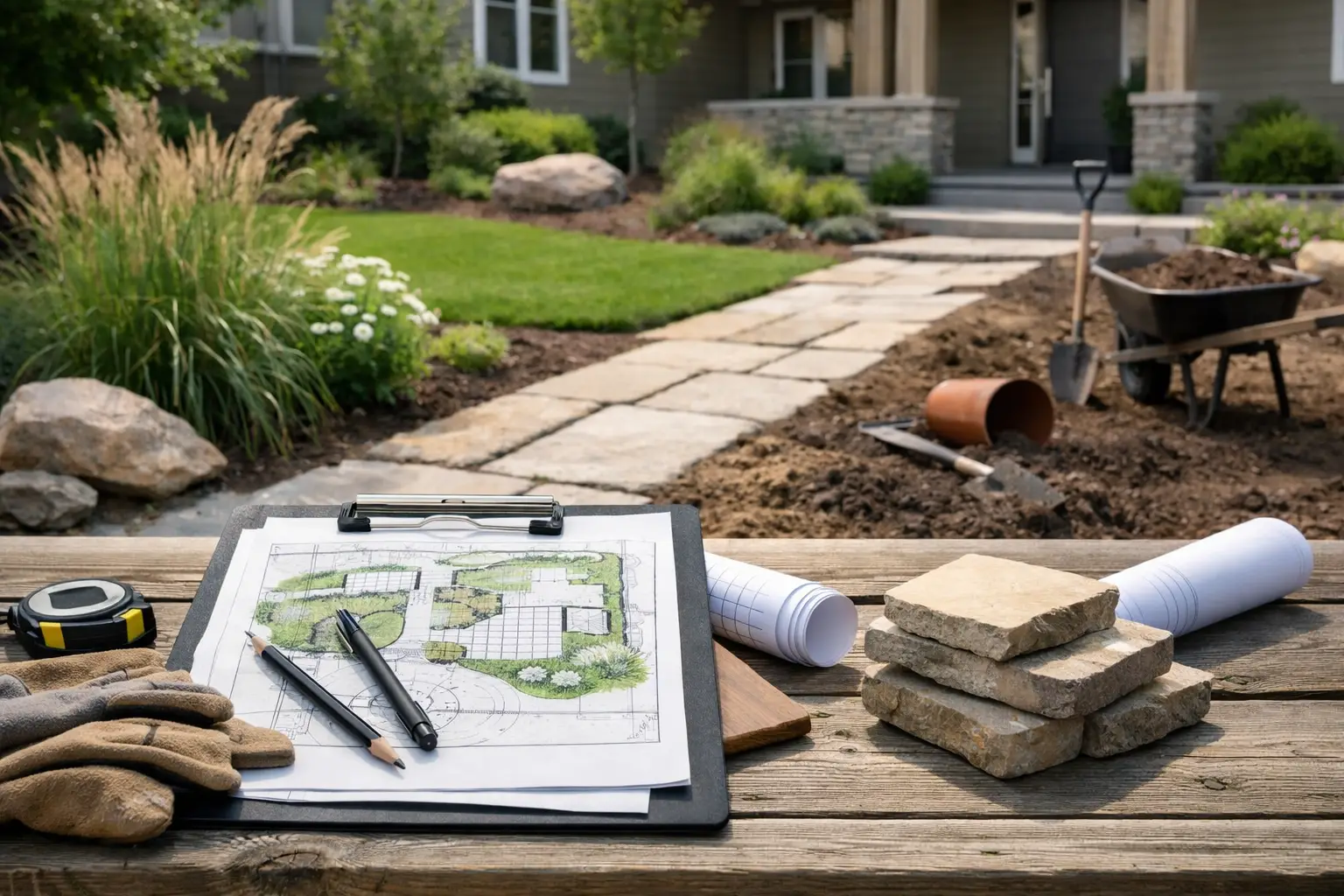
Front Yard Renovation Planning That Works
Estimated reading time: 7 minutes
A front yard can raise the perceived value of a home before anyone reaches the front door, or quietly drag the whole property down. That is why front yard renovation planning matters more than most homeowners expect. The layout, materials, planting, lighting, and driveway details all have to work together. If they do not, even expensive upgrades can feel pieced together instead of finished.
For homeowners investing in a major exterior upgrade, the real goal is not simply to make the yard look better. It is to create a front approach that feels intentional, elevated, and easy to live with every day. The best results come from a plan that balances curb appeal, circulation, maintenance, drainage, privacy, and the architecture of the home itself.
Why front yard renovation planning should come first
Many projects go off track before construction starts. Homeowners pick pavers they like, add new planting, maybe update the driveway, then realize the entry path still feels awkward or the yard now needs more irrigation than expected. The issue is rarely the individual choices. The issue is that the choices were not made as part of one coordinated design.
Strong front yard renovation planning creates order before money gets spent. It helps define how people arrive, where cars move, what the home should emphasize from the street, and how the yard should perform over time. That is especially important in Southern California, where sun exposure, water-conscious landscaping, and long outdoor seasons all shape what makes sense.
A polished front yard is usually built on restraint. Bigger is not always better. More materials do not always look more luxurious. In many cases, the highest-end outcome comes from simplifying the layout, reducing visual clutter, and choosing a few strong elements that relate clearly to the home.
Start with the function, not the finishes
Before talking about style, focus on how the front yard needs to work. That includes parking, pedestrian access, privacy from the street, package delivery, lighting, and how guests naturally approach the home. If children or pets use the front space, that matters too. So does whether the front yard is mostly visual or actually used as a livable extension of the property.
This stage is where trade-offs show up. A wider driveway may improve convenience but reduce softscape area. A dramatic walkway may look impressive but feel oversized on a smaller lot. Dense planting can add privacy, but if it blocks windows or creates maintenance headaches, it may work against the project.
The right plan resolves these tensions early. It does not force every feature into the yard. It decides what earns space and what does not.
Questions that shape a better layout
A strong design process usually starts with a few practical questions. Where should the eye go first from the street? Is the front door obvious, or does the entry need stronger definition? Does the driveway dominate the facade? Is there enough lighting for safety without making the home feel overlit? Does drainage move water away from hardscape and foundation areas the way it should?
These are not small details. They shape whether the finished yard feels refined or unresolved.
Match the renovation to the architecture
One of the fastest ways to make a front yard feel expensive is to make it feel cohesive. The hardscape pattern, color palette, plant style, and lighting should all support the architecture of the house. A modern home may call for cleaner lines, larger-format pavers, restrained planting, and crisp lighting placement. A more traditional property may benefit from warmer tones, layered planting, and a more formal pathway structure.
This is where many homeowners make avoidable mistakes. They choose elements they like individually, but the combination does not relate to the house. The result can feel trendy for a season and dated soon after.
Front yard renovation planning should protect against that. It creates a design language before materials are selected. That means every choice has a reason behind it, not just a visual appeal in a showroom sample.
Hardscape usually sets the tone
In most front yard projects, hardscape carries the biggest visual weight. The driveway, front walkway, entry steps, borders, and any retaining walls establish structure first. Planting and lighting then support that framework.
That is why hardscape decisions should not be treated as isolated upgrades. A new paver driveway can completely change the perceived scale of the home. A walkway can either guide guests naturally or create an awkward route that never feels right. Even subtle elevation changes need to be resolved carefully so the front yard feels smooth and intentional, not patched together.
Material choice matters, but proportion matters more. A premium paver installed in the wrong pattern or at the wrong scale will not create a luxury result. Good planning considers joint lines, transitions, border treatment, and how the material reads from the street as well as up close.
Planting should soften, not compete
Landscaping has a major role in front yard renovation planning, but it should not overwhelm the entry sequence. The best planting plans frame the house, soften hardscape, and create depth without making the space feel busy.
In Southern California, this usually means being strategic about water use, sun exposure, and long-term upkeep. Lush can be beautiful, but if the design demands constant trimming or struggles in heat, the yard may lose its edge quickly. On the other hand, a low-water landscape does not have to look sparse. With the right structure, texture, and layering, it can feel clean, rich, and architectural.
It also helps to think about maturity, not just day-one appearance. Plants that look perfectly scaled at installation can overtake a path, block windows, or swallow lighting within a year or two. Good planning accounts for growth so the yard still looks balanced later.
Lighting is where many front yards fall short
A front yard should perform at night, not disappear after sunset. Yet lighting is often added late, after the main layout is already locked in. That approach usually leads to a scattered result.
Lighting should be integrated into the plan from the beginning. Path lights improve safety, but they also influence rhythm and mood. Uplighting can highlight architectural features or specimen planting. Entry lighting helps the home feel welcoming and secure. The key is control. Too little lighting leaves the front yard flat. Too much makes it feel harsh.
A refined front yard uses lighting to support the design, not announce itself.
Budget clarity changes the project outcome
A premium result does not come from spending blindly. It comes from prioritizing the right components from the start. In some projects, the smartest move is to invest more heavily in driveway and entry hardscape because those elements dominate the frontage. In others, grading, drainage, or retaining work may need to come first before aesthetic features are addressed.
This is one reason professional planning matters. Without a clear scope, homeowners often approve upgrades in the wrong order. They spend on visible finishes first, then get forced into compromises when infrastructure issues surface later.
Transparent planning helps avoid that. It identifies where the money is doing the most work and where simplification can actually improve the design. Not every front yard needs more features. Many need fewer, executed at a higher level.
The value of a design-build approach
Front yard renovations involve more coordination than they appear to from the street. Layout decisions affect drainage. Material selections affect grading and installation sequencing. Lighting interacts with hardscape and planting. Driveway work has to relate to garage access and daily use.
When design and construction are handled together, there is usually more accountability and less guesswork. The plan is created with execution in mind, which helps reduce mid-project surprises and keeps the final result aligned with the original vision. For homeowners who want a polished exterior without managing multiple moving parts themselves, that structure matters.
This is especially true in high-expectation neighborhoods where curb appeal has to do more than look decent. It has to feel complete. A front yard should not read like a series of upgrades done over time. It should feel like one composed investment.
What homeowners should look for before moving forward
If you are planning a front yard renovation, the most important early step is not choosing stone, turf, or lighting fixtures. It is choosing a process that gives equal weight to design clarity and build execution. Ask whether the scope is detailed. Ask how circulation, drainage, and long-term maintenance are being considered. Ask whether the result will relate to the architecture of the home instead of chasing disconnected trends.
For Los Angeles homeowners making a serious investment in curb appeal, front yard renovation planning should create confidence long before installation begins. That is the difference between hoping the project comes together and knowing it will.
A well-planned front yard does more than impress from the street. It makes the home feel resolved the moment you arrive, which is exactly what a high-value exterior renovation should do.
Get Started
Send us a brief message and let’s work together.
"*" indicates required fields
We try our best to reach out in less then 24 Hours.