
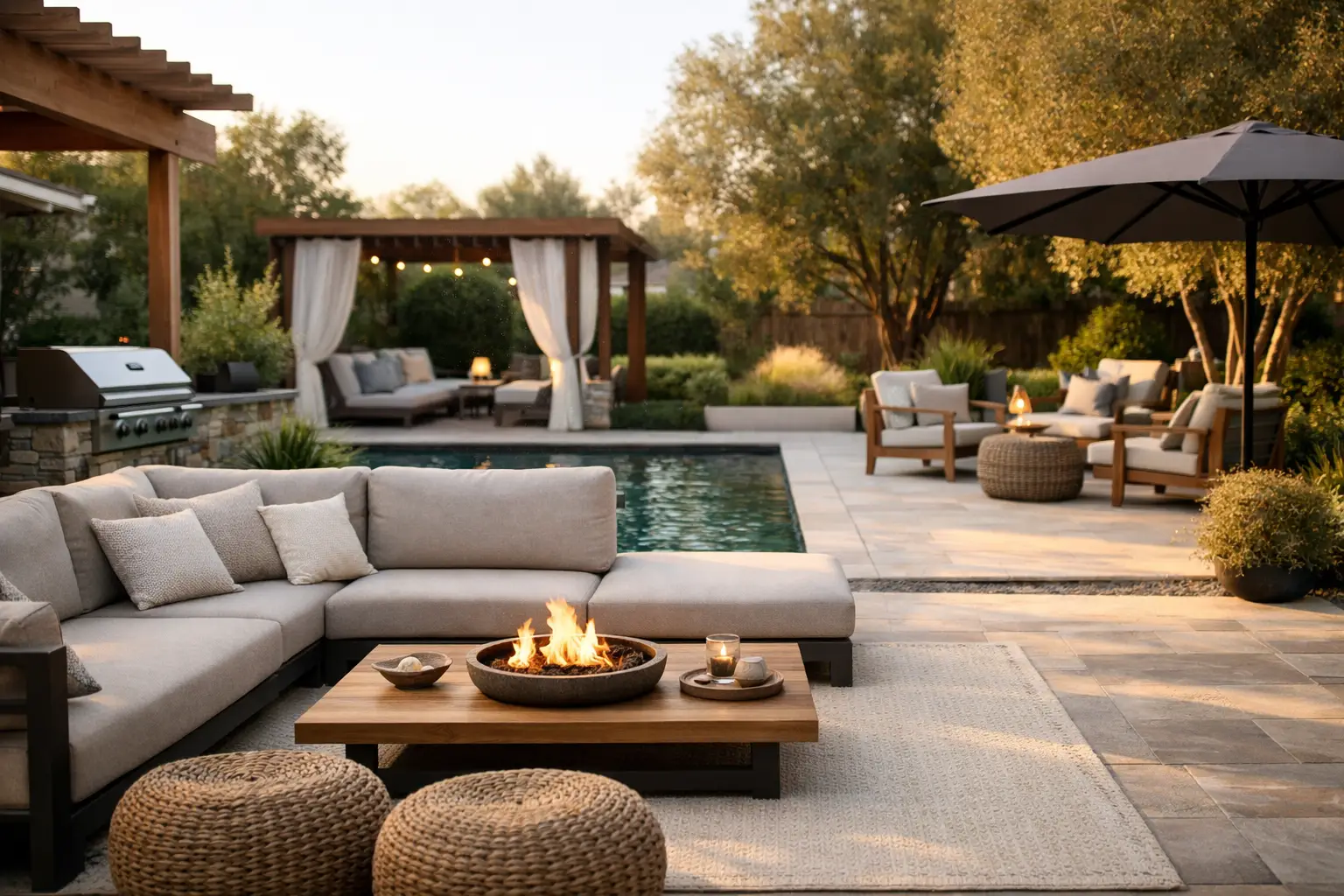
Outdoor Living Space Design That Works

Estimated reading time: 7 minutes
A beautiful backyard can still feel disappointing if it is not planned correctly. The issue is rarely the pavers, the pool, or the fire feature on its own. It is usually the layout. Strong outdoor living space design turns separate features into one cohesive environment that feels comfortable, functional, and worth the investment.
For homeowners upgrading high-value properties, that distinction matters. A backyard should not look like a collection of upgrades added over time. It should feel intentional from the first step outside, with every zone placed for a reason and every finish working together.
What outdoor living space design really means
Outdoor living space design is the process of shaping an exterior area around how people actually live. That includes movement, sightlines, comfort, maintenance, entertaining, privacy, and long-term performance. The goal is not simply to fit more features into the yard. The goal is to create an outdoor environment that feels easy to use and visually balanced.
That can mean very different things from one home to the next. A family with young children may prioritize open turf, shade, and safe circulation around a pool. A homeowner who entertains often may care more about an outdoor kitchen, a generous dining area, and lounge seating near a fire feature. In both cases, the design succeeds only if the space supports the lifestyle.
This is where many projects go off track. Homeowners often start by choosing materials or individual amenities before deciding how the yard should function as a whole. That approach can produce expensive features that compete with each other, block movement, or leave key areas underused.
Start with function, not features
The strongest designs begin with our 3 zone system and simply with a question: what should this yard do every week, not just on special occasions? If the answer is family dinners outside, poolside weekends, and low-maintenance curb appeal, the layout should reflect that from day one.
A practical way to think about it is in zones. Most luxury outdoor spaces include some combination of cooking, dining, lounging, recreation, and visual focal points. The mistake is treating those zones as separate projects. They should connect naturally. Guests should be able to move from the house to the dining area, from the dining area to the lounge, and from the lounge to the pool or fire feature without awkward gaps or bottlenecks.
Distance matters too. An outdoor kitchen placed too far from the indoor kitchen may sound appealing on paper but become frustrating in daily use. A fire pit tucked into a remote corner may look dramatic but stay empty because it feels disconnected. Good design reduces friction. It makes the outdoor space intuitive.
The layout decisions that shape the whole experience
Great outdoor living space design is often decided by details that homeowners do not notice at first. Circulation paths, elevation changes, proportions, and furniture clearances can make a finished project feel polished or off-balance.
Patio sizing is a common example. A seating area that looks large in a sketch can feel cramped once furniture is installed. A dining area may technically fit a table but leave too little room to pull out chairs comfortably. This is why scaled planning matters. A backyard should be designed around real use dimensions, not rough guesses.
Transitions are just as important. If the yard includes a covered patio, pool deck, turf area, and side-yard access, those spaces need visual and physical continuity. That can be achieved through material repetition, clean edge detailing, and thoughtful grade management. Without those elements, even premium finishes can feel fragmented.
Sightlines also deserve attention. From inside the home, what becomes the focal point? From the primary seating area, what do you see first? In high-end exterior remodeling, visual hierarchy matters. A well-placed water feature, fire feature, statement patio cover, or pool can anchor the yard and give the entire design a stronger identity.
Designing for Southern California living
In Southern California, outdoor spaces are not occasional use areas. They function as extensions of the home for much of the year. That changes the design standard.
Sun exposure is one of the biggest factors. A yard that looks open and impressive at noon can become harsh and uncomfortable without enough shade. Patio covers, pergolas, cabanas, strategic tree placement, and orientation of seating areas all affect whether the space feels usable during warmer months.
Material performance matters too. Surfaces should hold up well under heat, sun, and frequent use while still delivering a refined look. Some finishes photograph well but show wear quickly or become difficult to maintain. Others offer a better balance of luxury appearance and long-term durability. The right answer depends on how the yard will be used, how much direct sun it gets, and how much maintenance the homeowner wants to take on.
Privacy is another major consideration, especially in neighborhoods where homes sit relatively close together. Walls, hedges, screens, elevation changes, and covered structures can all improve privacy, but they need to be integrated into the design rather than added as afterthoughts. When handled correctly, privacy features make a space feel more exclusive without making it feel closed in.
Style should feel cohesive, not forced
One of the clearest signs of a professionally designed yard is consistency. That does not mean everything has to match. It means the architecture of the home, the hardscape materials, the outdoor structures, and the amenity choices all feel like they belong together.
A modern home may call for clean-lined pavers, streamlined water features, minimalist planting, and integrated lighting. A more traditional property may benefit from softer textures, warmer tones, and layered materials that create a more classic outdoor atmosphere. Neither approach is better by default. The right choice is the one that feels aligned with the home itself.
This is where restraint becomes valuable. More features do not always create a better result. In many cases, fewer elements executed at a higher level create a stronger luxury impression than trying to fit every trend into one yard. A well-designed outdoor kitchen, elegant patio cover, and refined lounge zone can outperform a crowded layout filled with competing focal points.
Why design-build matters on larger outdoor projects
For substantial exterior renovations, design and construction should not operate in separate worlds. A concept can look excellent in a rendering and still create problems during execution if it was not planned with construction realities in mind.
That is why design-build delivery is such a strong fit for outdoor remodeling. When the same team is responsible for concept development, detailed scope planning, and construction, there is more accountability from the beginning. Layout decisions can be tested against grading, drainage, structural needs, and utility placement before work starts. That reduces surprises and helps protect the quality of the final result.
It also creates better clarity for the homeowner. A detailed plan, clear material direction, and a defined project scope make it easier to evaluate what is actually being built. For clients investing in high-end outdoor environments, that level of transparency is not a bonus. It is a requirement.
Build Up Remodeling Inc approaches outdoor projects with that full-process mindset, which is one reason homeowners looking for resort style results tend to value a managed design-and-build experience over piecing together multiple vendors.
Common mistakes that weaken outdoor living space design
The most expensive mistake is building in the wrong design. If the layout, drainage, and structural planning are not resolved early, homeowners often end up reworking finished areas later. That adds time, cost, and frustration.
Another common issue is oversizing one feature at the expense of the rest of the yard. A massive pool, oversized island, or bulky patio cover can dominate the space and leave too little room for circulation or softer elements. Bigger is not always better. Proportion wins.
There is also the problem of underplanning infrastructure. Lighting, irrigation, gas lines, electrical access, drainage, and audio integration should be considered before surfaces are installed. Once premium hardscape is in place, retrofitting becomes far less efficient.
Finally, many homeowners underestimate how much furniture influences the final outcome. Outdoor spaces should be designed with real furnishings in mind, not treated as blank patios that will somehow come together later. The furniture plan affects dimensions, shade needs, traffic flow, and comfort.
What to prioritize if you want a luxury result
Luxury outdoor design is not just about finishes. It is about confidence in the plan. The best spaces feel calm, intentional, and easy to enjoy because the hard decisions were made early and made well.
Prioritize layout first with our 3 zone system. Then focus on shade, circulation, and one or two defining features that elevate the entire yard. Choose materials that support the architecture of the home and make sense for the climate. Make sure privacy, lighting, and infrastructure are accounted for before construction begins. Most of all, work with a team that can translate vision into a buildable scope without leaving critical details vague.
A high-end backyard should do more than impress visitors for a few minutes. It should make everyday life outside feel better, easier, and more complete. That is what strong design delivers, and it is why the smartest outdoor upgrades start with a real plan instead of a wish list.
Get Started
Send us a brief message and let’s work together.
"*" indicates required fields
We try our best to reach out in less then 24 Hours.